
Red flags in narcissistic relationships usually whisper.
They are subtle, small annoyances you rationalize, behaviors you convince yourself are “just quirks.”
But some red flags don’t whisper. They scream.
And if you ignore them, you’re setting yourself up for years of frustration, confusion, and even fear.
I remember the first time I noticed the warning signs in a past relationship.
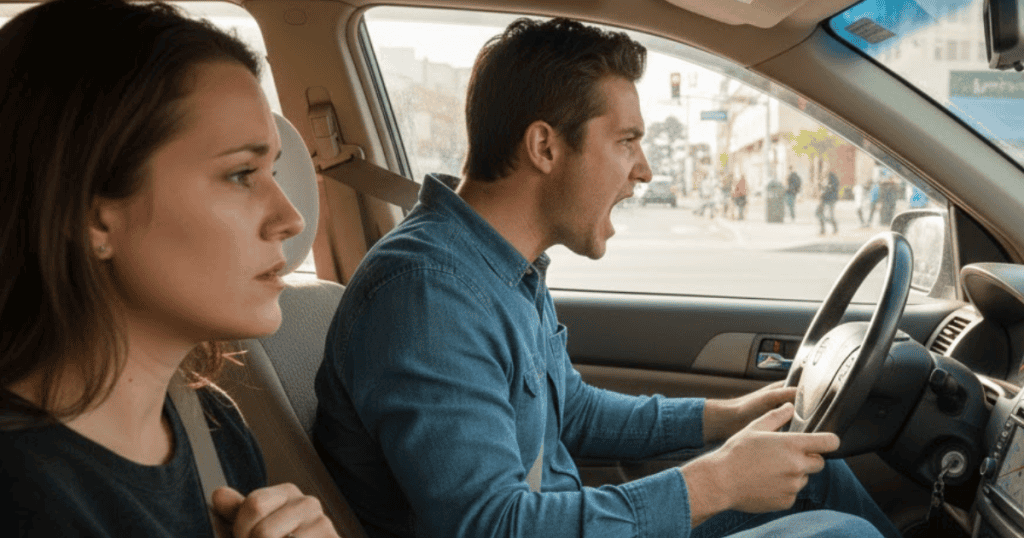
He was driving me to work, and he cut off another car aggressively, honking and screaming at a driver who hadn’t done anything wrong.
I laughed it off at the time. “He’s just passionate,” I told myself.
But looking back, that moment was a preview of everything to come.
His charm, intensity, and need for control all played out on the road before it ever appeared at home.
What I learned the hard way is that some red flags don’t appear in the relationship itself.
They show up on the road, in situations that reveal impulse control, entitlement, and aggression.
Below, I’ll show you the one huge red flag that predicts who a narcissist really is, and why noticing it early can save you years of pain.
Table of Contents
The Red Flag That Predicts Who Narcissists Will Become

Early in a relationship, narcissists are nearly impossible to read.
They are charming, attentive, and seemingly thoughtful.
Every interaction feels exciting.
You notice the chemistry, the way they remember the smallest details, the way they make you feel like you’re the only person in the world.
For a while, it seems like they’re perfect.
They even go out of their way to match your interests, to impress you in ways that feel almost miraculous.
But that charm is a mask.
Beneath it, patterns of aggression, entitlement, and emotional manipulation are quietly forming.
And while they rarely show up in the romance at first, these tendencies leak out in less controlled environments.
These are places where their ego is unchecked, and they don’t need to perform.
Driving is one of the most revealing tests.
It strips away social filters and exposes how someone handles frustration, control, and perceived threats.
If they rage behind the wheel, it reveals their emotional regulation and predicts how they’ll treat you once they feel entitled to your time, attention, and loyalty.
I learned this the hard way.
I dated a narcissist who seemed “perfect” in social situations and public outings.
He laughed at my jokes, remembered small details about me, and made me feel like I was seen in a way nobody else had ever seen me.
But in private moments, especially behind the wheel, his impatience and anger were impossible to miss.
That first glimpse of his true temperament was a warning I didn’t take seriously, and I paid the price for years.
When Aggressive Driving Reveals a Personality You Shouldn’t Ignore
Why Road Rage Is More Than “Just Stress”
Driving might seem ordinary, but for narcissists, it’s a stage.
Behind the wheel, they are anonymous. They don’t need to maintain appearances, and their social filters disappear.
This is where real impulse control, or lack thereof, is revealed.
Aggressive driving shows how they handle anger, impatience, and perceived disrespect.
Speeding, tailgating, or screaming at strangers is a controlled display of dominance, entitlement, and power.
Sitting in the passenger seat, you realize that you cannot stop this toxic behavior.
And if they act this way toward strangers, imagine what happens when the target of their rage is someone who can’t escape, like a partner in a relationship.
There was one evening when we were driving to my father’s house.
A car in front of us took too long to turn, and my narcissistic ex honked and swerved dangerously to “teach them a lesson.”
I gripped the door handle and told myself to just let it go.
But deep down, I knew it wasn’t just a bad day, but a reflection of his personality.
That fear, that unease, was my first real encounter with a narcissist’s sense of entitlement.
Aggressive driving is like a sneak peek into the future.
If you’re shrinking beside them in the car and wondering if it’s “normal,” pay attention.
That same dynamic will surface in arguments, decisions, and the quiet moments you share alone.
The Behaviors That Signal Who They Really Are

There are specific driving behaviors that serve as early warning signs of narcissistic traits, such as:
- Speeding and weaving through traffic as if the rules don’t apply.
- Tailgating and road intimidation to force other drivers to “submit.”
- Screaming at strangers over minor mistakes.
- Running red lights or ignoring lane markings because they feel entitled.
- Passive-aggressive gestures like brake-checking or flipping off other drivers.
I recall one particularly tense drive home from a wedding, where every car on the road became a target for my narcissistic ex-partner.
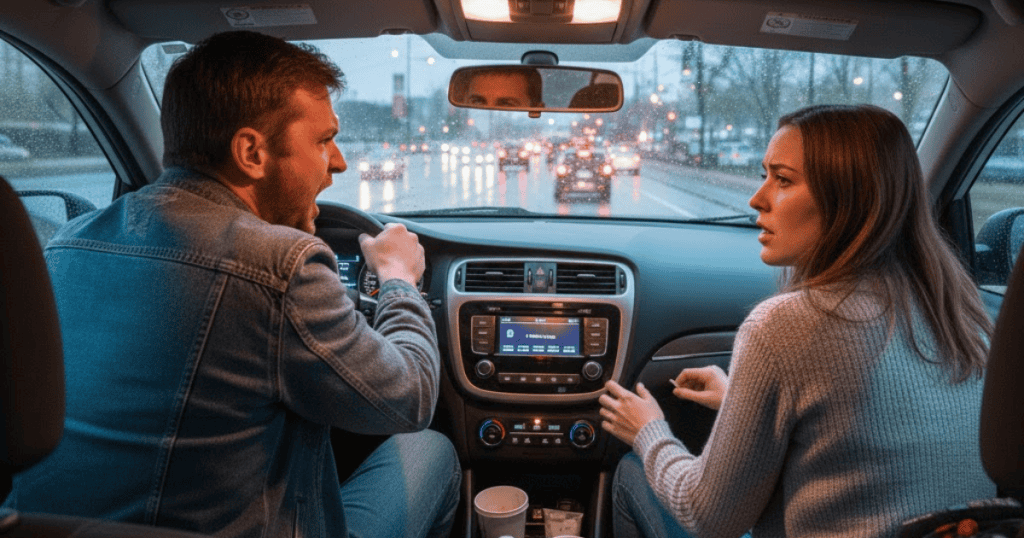
He yelled, cursed, and made cutting maneuvers that left me white-knuckled in the passenger seat.
That aggression didn’t vanish when the car stopped.
It became part of his everyday interactions, escalating toward me in private and public.
This is why road behavior matters: it’s a microcosm of how they’ll act when they feel entitled to your time, energy, or emotions.
The Mindset Behind Their Road Rage
Narcissistic rage is never random. It simmers under the surface, waiting for a target.
When behind the wheel, they feel powerful.
They dominate space, intimidate strangers, and “teach people lessons” in ways that leave them feeling victorious.
Consider what happens in a narcissistic relationship.
That same mindset translates into subtle manipulations.
Belittling comments disguised as jokes, controlling choices disguised as concern, or explosive outbursts when boundaries are crossed.
The road is where you first see the rehearsed charm fall away and the real patterns emerge.
I remember driving through a busy city with my toxic ex, silently watching him tailgate and yell at drivers.
He turned to me afterward with a calm smile, as if nothing had happened.
That duality was exhausting.
It taught me early that narcissists are strategic. They control the narrative, even after displaying dangerous behavior.
When the Car Becomes a Preview of the Relationship

Sitting beside a narcissist during aggressive driving is like a crash course in early conditioning.
You learn to shrink, stay quiet, and justify the narcissist’s behavior.
But the tension in the car mirrors the tension you’ll feel at home later.
The fear of upsetting them, the self-monitoring, and the constant justification are patterns that escalate as the toxic relationship continues.
Over time, what starts as road rage transforms into emotional control, manipulation, and even verbal abuse.
Once, we were driving to my cousin’s birthday party.
Every minor delay or hiccup in traffic triggered his yelling.
I found myself apologizing to other drivers for his actions, even though I had no control.
That was my first taste of how it feels to be constantly on edge: anticipating someone else’s reactions, adjusting my behavior to avoid conflict.
Later, I recognized that same pattern in arguments and disagreements at home.
How You Start Making Excuses for Their Anger
Partners of narcissists often rationalize early signs of aggression, like:
- “He’s had a bad day.”
- “He’s just impatient.”
- “He’s passionate, it’s not personal.”
- “He doesn’t mean anything by it.”
These rationalizations train you to tolerate bigger outbursts later.
I remember pretending everything was fine while my ex screamed at another driver, nodding along like it was acceptable.
My body was tense, my chest tight, but my mind whispered, “Maybe I’m overreacting.”
That inner conflict is exactly what narcissists rely on. They thrive when you question your own judgment.
I also noticed myself apologizing preemptively, trying to avoid provoking his temper even when it wasn’t directed at me.
That mindset is how narcissistic abuse escalates slowly, until you’re deeply conditioned to accommodate someone else’s rage.
How Lack of Safety in the Car Predicts Lack of Safety in the Relationship
Aggression behind the wheel is a preview of emotional danger.
Someone willing to risk your physical safety without blinking will eventually risk your peace, self-worth, and sanity.
Notice how your body responds next to someone who drives aggressively: the tight shoulders, shallow breath, the tension in your jaw.
That is your intuition signaling danger.
Ignoring it doesn’t make it go away.
It compounds the risk because the same patterns will appear in the relationship.
I left my narcissistic ex after years of emotional exhaustion, and recalled those first tense drives.
The fear I felt in the car was identical to how I felt walking on eggshells around him at home.
The correlation is clear: unsafe driving = unsafe relationship.
Why Aggressive Driving Should Never Be Overlooked

Aggression is not an isolated trait. It’s a personality pattern.
Narcissists escalate from road rage to emotional rage when they feel ownership over you.
That unchecked anger bleeds into communication, conflict, intimacy, and even everyday stressors.
Ignoring this early red flag can lead to years of misery.
I know women who laughed off road incidents for months, only to realize later that their partner’s toxic behaviors mirrored what they saw in traffic.
That first scream behind the wheel was the first warning. They just didn’t listen.
According to research, people with narcissistic traits often exhibit aggression when they feel a loss of control.
This is seen especially in situations that allow them to assert dominance anonymously.
The road is just one arena. The home is another.
The same lack of empathy, impulsivity, and entitlement will eventually infiltrate every corner of your life if ignored.
Red Flags Don’t Fade, They Forecast

Early aggression predicts long-term harm.
If someone demonstrates entitlement, impatience, and poor emotional regulation behind the wheel, they are likely to carry those traits into the relationship.
Safety isn’t only physical. It’s emotional, mental, and spiritual.
Trust your instincts.
Notice how your body feels when someone drives aggressively.
If you feel unsafe, it’s not paranoia. It’s foresight.
The moment you see the red flag, take it seriously.
It’s easier to walk away early than to try to change a narcissist, because they don’t change.
I learned this lesson through hard experience, supported by the people who truly loved me, like my dad, my cousins, and my husband.
I rebuilt my boundaries, identity, and trust in others.
And I realized that noticing a red flag is how women protect themselves, prevent years of abuse, and reclaim their lives.
Related posts:
- The Narcissist’s Dating Strategy: Why They Target Women Who ‘Have Their Lives Together’?
- The Psychological Cost of Dating a Narcissist (And What I Want You to Know)
- 55 Narcissistic Relationship Quotes That’ll Make You Laugh Until Your Narcissistic Ex Cries
- Why You Can Never Change a Narcissistic Partner (And Why You Shouldn’t Attempt)?
- 6 Phrases That Shut Down Narcissistic Men Without Wasting Your Breath