
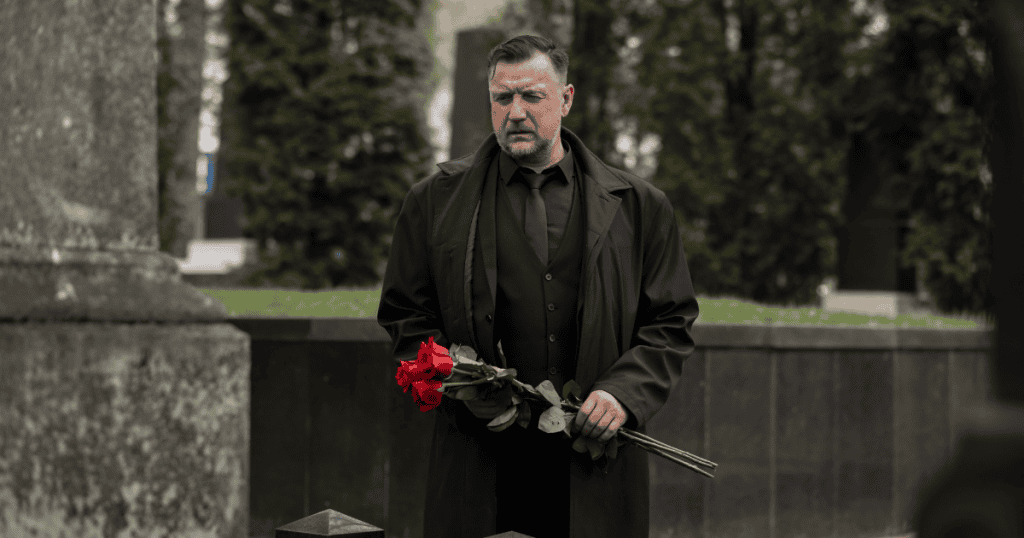
Funerals are one of the rare moments in life where the noise is supposed to stop.
Grief forces people into stillness, humility, and an unspoken agreement that this moment is not about ego, power, or performance.
It’s about honoring a life that has ended and holding space for those left behind.
And yet, some people cannot tolerate that silence.
I remember standing just outside a chapel entrance, bracing myself not for the loss we were about to acknowledge, but for who I knew would arrive next.
When my narcissistic mother finally walked in, late and noticeably loud, the emotional temperature changed instantly.
Conversations stalled. Shoulders tightened.
The collective grief fractured into vigilance.
It wasn’t dramatic, but every person in that room felt it.
Funerals are meant for dignity, unity, and respect.
For narcissists, these environments become irresistible stages where attention is scarce, and control is limited.
When they can’t dominate emotionally, that loss of power often triggers their most shocking behavior.
Table of Contents
8 Things Narcissists Do at Funerals That Shock Everyone
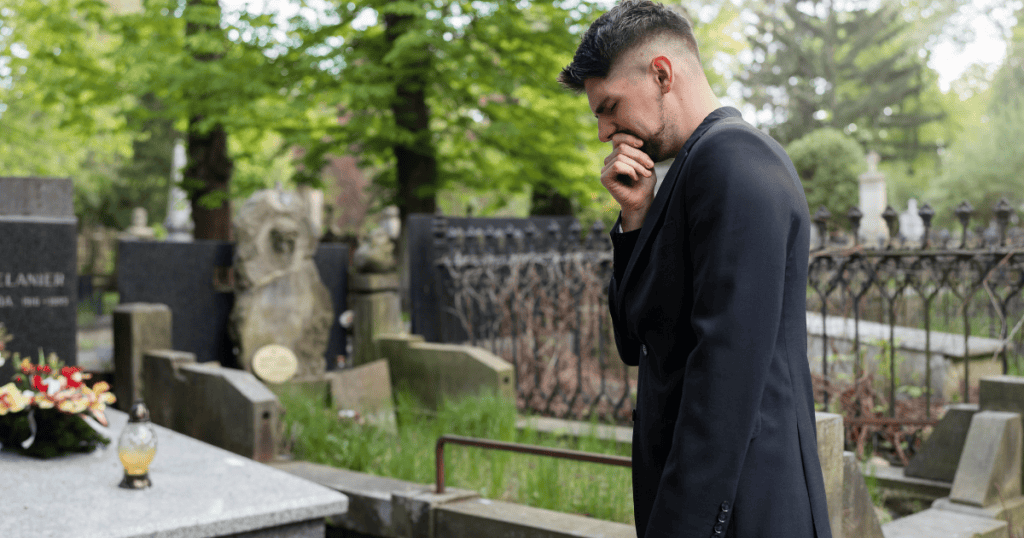
1. They Immediately Make the Day About Themselves
A narcissist cannot allow the spotlight to rest anywhere else for long.
Even at a funeral, every story must bend toward them, and every memory must validate their importance.
Every interaction is expected to quietly reinforce their belief that they are central to everything, even loss.
At my maternal grandfather’s service, my toxic brother stationed himself near the memory table.
He intercepted mourners before they could fully process their emotions.
Each condolence turned into a monologue about how he had been misunderstood and how he had a “special bond.”
He spoke with the certainty of someone rewriting history in real time, insisting that the deceased had always believed in him more than anyone else.
I watched people nod politely, eyes darting toward exits, clearly unsure how to disengage without seeming disrespectful.
Their grief was interrupted by a narcissist’s need for validation.
I felt my jaw tighten, the urge to roll my eyes almost overwhelming, but funerals demand restraint.
The narcissist relies on that restraint, knowing no one will openly challenge them in a room built on courtesy, grief, and unspoken social rules.
Those same rules end up protecting the very narcissistic behavior everyone silently resents.
2. They Turn Grief Into a Competition
Their grief must be the loudest, most visible, and most dramatic.
Quiet sorrow doesn’t register to them unless it can be outperformed or reframed to guarantee attention.
Only then does it give them emotional dominance over everyone else present.
At one funeral service, my toxic sister’s crying escalated into gasping sobs that drew attention away from the officiant’s words.
She paced, clutched her chest, and collapsed into a folding chair as though the weight of loss was physically unbearable.
Her body language broadcast distress meant to be witnessed rather than processed.
Meanwhile, my father stood still beside me, tears welling but contained.
His grief was expressed through silence rather than spectacle, and his restraint somehow felt heavier and more honest.
Behind me, I heard someone whisper, “Did she even spend time with him?”
The question wasn’t cruel. It was confused.
Narcissistic grief doesn’t feel authentic because it isn’t rooted in loss.
It’s rooted in visibility, comparison, and the need to be seen as suffering more than anyone else.
3. They Create Drama in a Room Meant for Peace
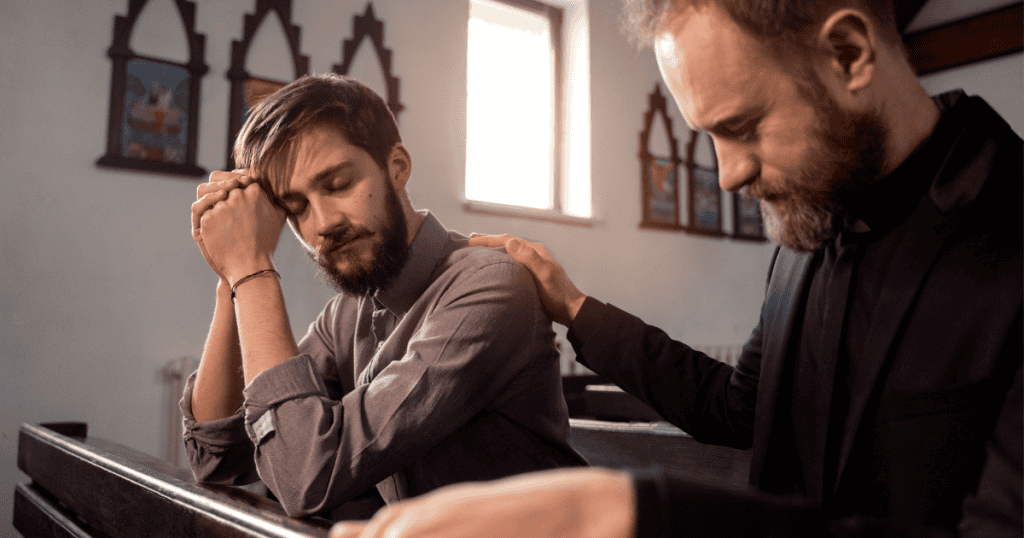
Funerals strip narcissists of control, and chaos is how they regain it.
They inject tension where calm is required, and conflict where gentleness is needed, b.
Because unresolved hostility feels more familiar to them than shared humanity.
At one memorial service held in a small chapel, my narcissistic sibling chose a narrow aisle during a moment of silence.
He did this to confront a cousin about an argument from years earlier.
His voice wasn’t loud, but it was sharp enough to cut through the stillness.
He carefully calibrated it to dominate the moment without appearing overtly disruptive.
Heads turned. Breaths caught.
The sacred pause was broken by discomfort that rippled outward, replacing reflection with hyper-awareness.
People had come prepared to mourn, not to navigate emotional landmines.
The emotional toll was immediate. Grief was compounded by anxiety, and sorrow was layered with resentment.
There was also the quiet realization that even in death, peace was something this toxic family was never allowed to have uninterrupted.
4. They Hog the Spotlight Any Chance They Get
Narcissists announce themselves even when no announcement is appropriate.
Their entrances are theatrical, their greetings are excessive, and their timing is profoundly inappropriate.
It’s as though silence itself offends them and must be interrupted to reestablish their presence.
One time, my aunt, another narcissistic family member, entered the chapel with exaggerated sighs and greeted people with forced brightness.
She spoke during readings and laughed softly during quiet moments.
She turned every interaction into a commentary on how difficult the day had been for her.
Watching someone perform at a funeral is unsettling in a way that lingers.
It creates cognitive dissonance.
Your body recognizes the solemnity of the moment, but your mind struggles to reconcile it with someone using tragedy as a stage rather than a space for reverence.
5. They Give Inappropriate or Self-Serving Eulogies
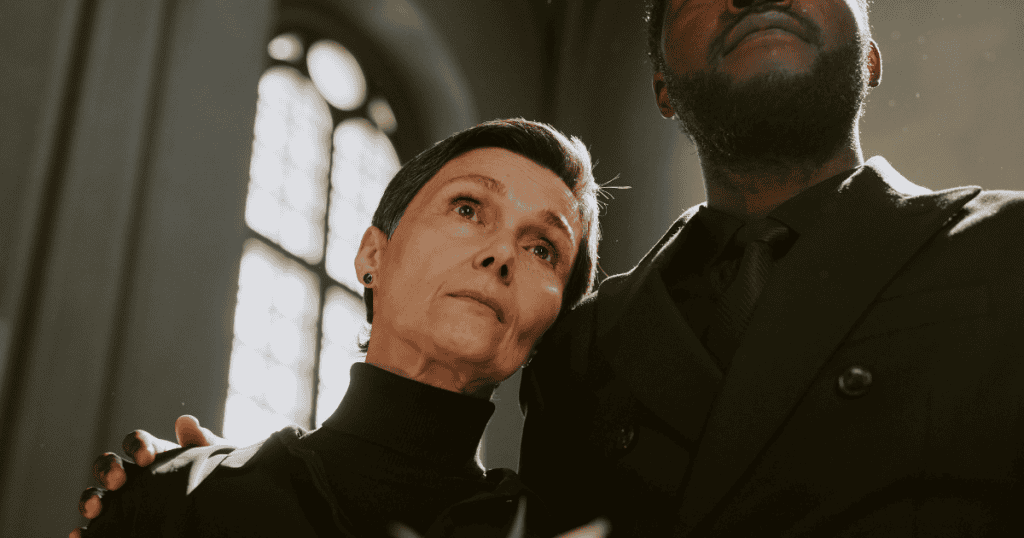
Given a microphone, a narcissist rarely resists rewriting the narrative.
Their eulogies drift from honoring the deceased to showcasing themselves, subtly reshaping the moment into a platform for validation or unresolved resentment.
At a community hall memorial, my self-absorbed mom volunteered to speak without consulting anyone.
She stepped forward with an eagerness that felt misaligned with the gravity of the room.
What began as a few acceptable remarks quickly shifted into stories centered on rivalry and thinly veiled insults masked as humor.
Each sentence pulled focus further away from the life being remembered.
The room collectively realized that something sacred was being hijacked in real time.
I felt embarrassed for her, yes, but more than that, I felt anger for the person whose life was being overshadowed.
This should have been a final moment of respect, dignity, and uncomplicated remembrance.
6. They Play the Victim to Gain Sympathy
Narcissists are experts at manufacturing vulnerability when it benefits them.
They present themselves as uniquely devastated, burdened, and wounded.
They adopt a fragility that appears sincere on the surface but is strategically deployed to reclaim emotional control.
After one service, while others stood quietly processing their grief, my narcissistic mother collapsed into a chair near the exit.
She repeated how no one understood her pain and how she had “lost more than anyone.”
Her voice trembled just enough to draw attention without appearing overtly performative.
Instinctively, people gathered around her, offering comfort.
Those with quieter grief receded into the background, their sorrow rendered invisible.
A narcissist’s self-pity doesn’t coexist with others’ pain. It eclipses it.
The room reorganizes itself around their needs, leaving everyone else to carry their grief in silence while the narcissist is validated once again.
7. They Use the Funeral as a Chance for Revenge
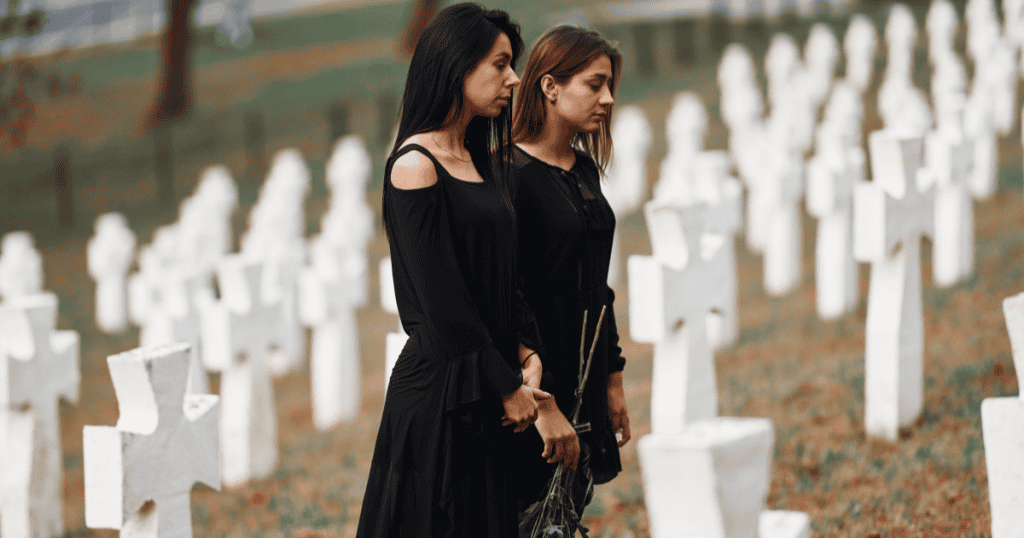
Some narcissists seize funerals as opportunities to settle scores.
When the deceased can no longer respond, cruelty feels safer, wrapped in the false justification of “truth-telling” or unresolved emotion.
At a burial service, while earth was being lowered and prayers spoken, my arrogant sister leaned toward me.
She whispered something cutting about the deceased’s failures.
I remember the shock at the realization that even death did not earn basic decency from someone who feeds on dominance and control.
Watching someone attack a person who can no longer defend themselves feels like a violation of something fundamental.
It’s as though an unspoken moral boundary has been crossed in a space where humanity should be at its most intact.
8. They Disrespect the Entire Room Without Shame
Eye-rolling during prayers.
Audible sighs during readings.
Storming out mid-service when attention shifts elsewhere.
They do this as if the collective grief of the room is an inconvenience rather than a shared human experience deserving of respect.
At one chapel service, my toxic parent abruptly stood and left before the final blessing.
Her chair scraped loudly across the floor, the sound cutting through the silence with unnecessary force.
Heads turned. The moment fractured.
Instead of closure, the room absorbed disruption.
Attention was pulled away from remembrance and redirected toward damage control and confusion.
There is something deeply disorienting about witnessing such callousness in a sacred moment.
It leaves people questioning reality itself, wondering how one person can so thoroughly disregard collective humanity.
It also raises the question of how often this pattern has been normalized simply because no one feels permitted to name it.
Why Funerals Reveal a Narcissist’s True Nature
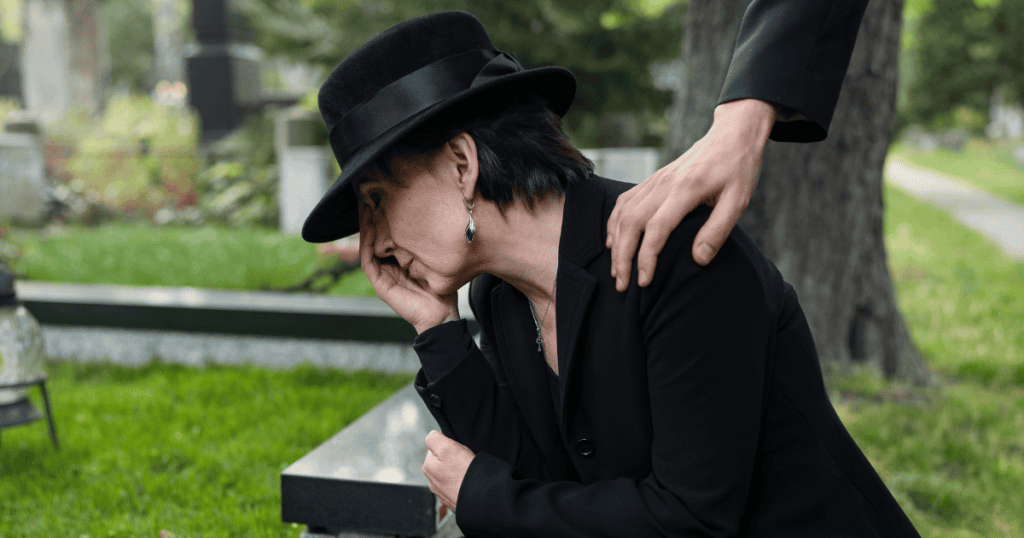
Funerals remove distractions.
There is no status to leverage, no achievement to display, no hierarchy to dominate, and no one to impress except the silent eyes of those who truly care.
Narcissists cannot tolerate being one among many.
They must be the emotional center, even in rooms designed for collective mourning.
When attention is unavailable, their toxic behavior escalates.
They feel threatened, exposed, and deprived of validation that they have unconsciously tied to survival.
I realized this once while standing outside a chapel.
I watched my steady and grounded cousins and my father’s quiet presence, while my mom and siblings fractured the moment with tension.
The contrast was jarring, and it made something painfully clear.
Funerals expose truths narcissists cannot mask, because grief does not negotiate with ego.
And no amount of pretense can rewrite the reality of loss.
Grief Doesn’t Excuse Their Behavior, It Exposes It

Grief reveals character.
It does not justify disrespect, no matter how loudly excuses or justifications are offered by those who feel entitled to dominate the space.
A narcissist’s behavior at a funeral is evidence of self-centeredness laid bare.
Their actions are not your responsibility to explain, soften, or excuse.
It’s not a reflection of your failure if you refuse to absorb the chaos they create.
You are allowed to protect your peace, even in mourning.
You are allowed to honor the deceased without absorbing someone else’s dysfunction or letting their performance overshadow a sacred moment.
Breaking generational cycles often looks quiet and internal.
It’s choosing dignity over drama, clarity over guilt, and refusing to let a narcissist turn even death into a stage.
That choice is courageous because it honors both yourself and the life you are there to remember.
Related posts:
- 9 Subtle Ways to Humble Narcissists So Quietly It’ll Drive Them Crazy
- What Really Happens to Narcissists in The End When There’s No One Left?
- 11 Disturbing Skills Narcissists Perfect (And How They Use Them Against You)
- 6 Stupid Simple Ways to Make Narcissists Feel Exactly What They Put You Through
- Understand This and 90% of Your Problem With Narcissists Will Disappear