

Narcissists are attracted to people who lack strong boundaries.
They sense it like sharks smell blood in water, that subtle willingness to overgive, to explain, to tolerate.
They know who will bend first.
For years, I lived on that side of the line, constantly saying yes when I wanted to say no.
I excused tone-deaf insults from my mother as “just her way” and kept picking up the emotional messes my siblings left behind.
I told myself I was being “understanding,” but the truth was I was being drained.
Every “sure, I can help” and every “it’s fine” chipped away at my sanity.
Eventually, I was left exhausted, resentful, and unsure who I even was outside of keeping the peace.
The day I hit emotional burnout, I realized something important.
The difference between being drained by narcissists and being untouchable is boundaries, firm, enforced, unapologetic boundaries.
These four are the most crucial.
They’ll change the way you move through every relationship.
This is especially true with narcissistic family members who have mistaken your compassion for compliance.
Table of Contents
The “No” Boundary
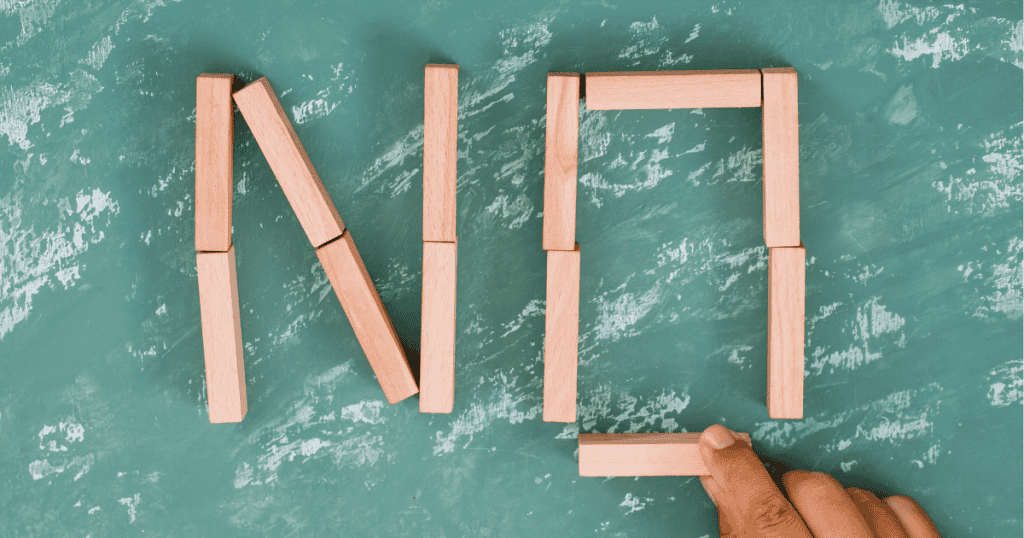
Why Narcissists Hate It
Narcissists love people-pleasers. “Yes” is their oxygen.
It feeds their entitlement and keeps them center stage.
When you start saying no, you’re not just rejecting their request. You’re threatening their entire illusion of control.
Narcissists see your compliance as proof that they’re special, smarter, and deserving of your energy.
My mother used to call me in the middle of work just to vent about my toxic siblings, hour-long sessions of blame and drama.
If I tried to end the call, she’d sigh and say, “You never have time for family anymore.”
For years, I’d drop everything. Until one day, I didn’t.
I said, “Mom, I can’t talk right now. We can discuss this later.”
She hung up mid-sentence.
The silence afterward felt like punishment, but it was actually peace.
Narcissists despise “no” because it reminds them you’re not their property.
What It Looks Like in Action

“No” isn’t always loud.
Sometimes it’s silence, not replying to a guilt-tripping message.
Other times, it’s declining a last-minute favor that hijacks your day, or walking away from an argument designed to bait you.
My narcissistic brother once demanded I help him fix his school project, something he’d ignored for weeks.
When I refused, he stormed off muttering, “You think you’re better than us now.”
But I didn’t explain. I didn’t justify. I just went to bed.
That’s what “no” looks like: doing nothing instead of over-explaining everything.
Why It’s Not Rude But Self-Respect
Saying “no” isn’t cruelty, but clarity.
It’s the act of choosing yourself before the person who’s been choosing themselves at your expense.
Survivors of narcissistic families often mistake boundaries for betrayal.
We were raised to believe that self-sacrifice equals love.
But “no” is not rejection. It’s protection.
Each time you say it, you’re teaching your nervous system that you’re safe in your own decisions.
You’re not the rude one. You’re the one finally drawing the line that others have ignored for too long.
The Emotional Boundary

Stop Owning Their Emotions
Narcissists don’t want connection. They want control.
They weaponize emotions to make you responsible for their moods.
If they’re angry, you must calm them. If they’re sad, you must fix it.
My toxic sister was a master of this.
Any disagreement turned into, “You’re making me feel attacked.”
If I tried to defend myself, I was “too sensitive” and I’d end up apologizing just to restore peace.
One day, I paused mid-conversation and said, “Your feelings are valid, but they’re yours to manage.”
She froze, as if I’d just spoken a forbidden language.
That was the day I realized emotional boundaries sound like blasphemy to narcissists, but they’re liberation for survivors.
Detach From Emotional Traps
The moment you stop reacting, the narcissist loses power.
They thrive on your engagement, your explanations, your outrage, your attempts to reason.
Once, during a visit with my toxic family, my aunt began criticizing how I handled my career.
Normally, I’d defend my choices for an hour. This time, I just said, “I see it differently,” and went back to my coffee.
No reaction. No lecture.
And then I saw my aunt looked disoriented.
Detachment isn’t indifference. It’s self-preservation.
When you refuse to be pulled into emotional whirlpools, you remind them that your peace is not a toy.
Protect Your Inner Peace
Peace is your new power.
Narcissists equate calm with weakness, but it’s the exact opposite.
When you remain grounded, no matter how much they provoke, you’re operating from strength.
My dad used to remind me, “The loudest person in the room isn’t the most powerful one.”
He was right.
Calm detachment makes you free, because when you stop owning their emotions, you finally get to feel your own.
The Respect Boundary

One Warning, Then Action
Disrespect once can be a mistake. Twice is a choice.
Narcissists test boundaries in small doses to see how much you’ll let slide.
My self-absorbed brother once mocked me in front of relatives for being “too emotional.”
I laughed it off the first time.
The second time, I calmly said, “Don’t talk to me like that again.”
He rolled his eyes.
A week later, he did it again, so I walked out. I didn’t shout or justify. I just left.
That silence hurt him more than any argument would have.
That’s what respect enforcement looks like: one warning, then consequences.
Calling Out the Pattern
Narcissists fear exposure.
The moment you name what they’re doing, you puncture their narrative.
When my narcissistic mother started turning my siblings against me through subtle comments, I stopped defending myself privately.
I said in front of everyone, “I’ve noticed these comparisons lately. They’re unfair and hurtful. Let’s stop that.”
She didn’t speak for a moment, and then changed the subject.
That’s the power of naming patterns. You shine a light where narcissistic manipulation thrives in darkness.
Raising the Standard
Respect isn’t something you earn from a narcissist. It’s something you demand through your standards.
Survivors often confuse loyalty with endurance.
But staying in environments that repeatedly humiliate you is self-abandonment.
My healing after a narcissistic abuse began when I decided that respect wasn’t negotiable, not even from family.
Because once you raise the standard, the people who can’t meet it automatically fall away.
The Access Boundary

Not Everyone Deserves Full Access
One of the biggest mistakes survivors make is over-access.
We overshare, overgive, and overexpose ourselves, hoping transparency will build trust.
With narcissists, it only gives them ammunition.
I used to tell my jealous sister everything, my struggles, my wins, my fears.
Soon enough, she’d twist my words into gossip. “She’s struggling again,” she’d whisper to our relatives.
That’s when I learned that access is earned, not owed.
Just because someone is family doesn’t mean they get a front-row seat to your healing.
Close the Doors They Exploit
Narcissists exploit any open door, like time, emotions, information, or physical presence.
When you limit those doors, you take away their tools.
I started ending phone calls earlier, avoiding topics they could weaponize, and keeping visits short.
My toxic mom complained that I was “distant.” But distance is clarity.
Every time you limit access, you reclaim bandwidth.
You stop performing for their approval and start living for your peace.
Power in Privacy
Privacy isn’t isolation. It’s freedom. It’s the art of keeping parts of yourself sacred.
Narcissists want total access because secrets mean autonomy, and autonomy means they can’t control you.
My husband once told me, “You don’t owe anyone a full report on your life,” and it hit me.
I’d been narrating my every move to my narcissistic family, seeking validation for choices that didn’t need approval.
Now, I share it selectively. I protect my projects, my joy, my silence.
Because the less they know, the less they can distort.
Boundaries Don’t Push People Away, They Push Narcissists Out

Boundaries don’t push good people away. They only repel the ones who benefited from your lack of them.
Healthy people will celebrate your “no.”
They’ll respect your privacy, value your peace, and mirror your respect.
Narcissists, on the other hand, will rage, guilt-trip, or play the victim, because your strength exposes their weakness.
When I finally enforced all four boundaries, my narcissistic family dynamic changed.
Some relationships shrank.
Others, like with my dad and cousins, grew stronger, rooted in mutual respect, not obligation.
You may lose people, yes. But what you gain is priceless: self-trust.
Each “no,” each limit, each quiet refusal is not walls, but gates.
You’re not cutting people out. You’re curating your life.
Boundaries are self-recognition.
And when you master these four healthy boundaries, narcissists don’t stand a chance.
Related posts:
- How to Deal With a Narcissist Who Hates You (And Still Win)
- Healthy Guilt vs Unhealthy Guilt: How Narcissists Train You to Carry Shame That Isn’t Yours
- Inside the Narcissist’s Brain: 6 Scientific Facts That Prove It’s Not You, It’s Them
- 6 Things That Happen in a Narcissist’s Brain During Rage (And Why It’s So Dangerous)
- 10 Ugly Truths About Narcissists That Make You Wish You’d Known Sooner