

Funny how no one says anything while you’re slowly being destroyed behind closed doors.
No one asks if you’re okay.
No one steps in when the insults get sharper.
No one dares to challenge the person doing the damage.
But the second you speak up, suddenly everyone remembers something. Suddenly, they knew all along. Suddenly, you’re the problem for saying what they’ve been too scared to say themselves.
That’s the dirty truth about family abuse.
It’s not invisible. It’s ignored.
Table of Contents
Family Abuse Isn’t Hidden. It’s Just Conveniently Silenced.

Most people think abuse looks like bruises or screaming matches. But when you grow up with a narcissist, it’s much quieter than that.
It’s the guilt you feel for saying no.
It’s the way they twist your words until you question your own mind.
It’s the silence after you cry because no one ever comes to check on you.
And everyone around you sees it. They just pretend they don’t. Because acknowledging the truth means doing something about it.
And most people would rather keep the peace than face the discomfort of honesty.
Why They Stay Silent Even When They Know?
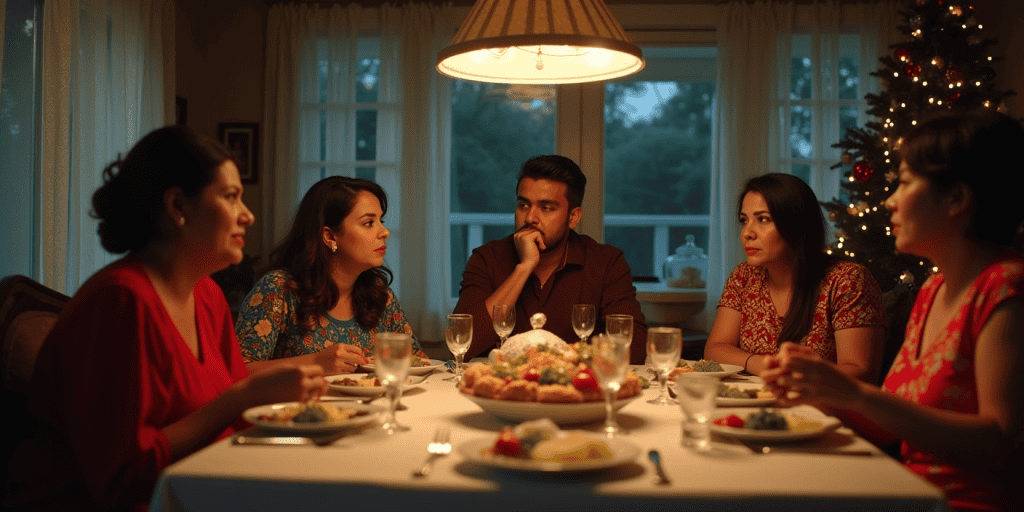
Here’s what I’ve learned after years of watching people turn a blind eye to what was right in front of them.
First, they’re afraid. Afraid that speaking up will make them the next target. Afraid the narcissist will turn their venom on them.
Second, some of them benefit. Narcissists hand out approval like candy when it suits them. And people get addicted to being on their good side.
Third, they’ve normalized dysfunction. They’ve lived in the same toxic waters for so long that they can’t even tell they’re drowning.
So they ignore it. They stay quiet. They hope you’ll do the same.
What Happens When You Finally Speak Up?

The moment you speak the truth out loud, the whole dynamic changes.
It doesn’t matter how calm or kind you are when you do it. You’ll still be called dramatic. Ungrateful. The one who’s “trying to ruin the family.”
I remember the first time I confronted what was happening with my own mother.
People didn’t defend me. They avoided me. Some acted like I made it all up. Others told me to just “let it go” and “move on.”
Not because they didn’t believe me!
But because they didn’t want to face what it said about them. That they knew. That they watched.
And they did nothing.
The Realization That Set Me Free

The turning point for me wasn’t when people finally acknowledged the abuse. It was when I stopped needing them to.
I realized I didn’t need anyone’s permission to trust my experience. I didn’t need validation to know I was hurt. And I didn’t need silence to be the price I paid for keeping others comfortable.
What finally gave me peace wasn’t their support.
It was my decision to stop waiting for it.
To the One Who’s Finally Speaking Up

If you’re in that place right now, where your voice is shaking but steady, and your truth is making everyone uncomfortable, stay with it.
You’re not ruining anything. You’re revealing what’s been broken for a long, long time.
And yes, some people will leave. But so will the weight of pretending.
This part hurts.
But it’s also the part where everything starts to heal.
The Life You Build After Exposing The Truth
When I finally spoke up, everything fell apart. But what I didn’t expect was how much space that made.
For real peace.
For real love.
For a version of myself that wasn’t built in survival mode.
That’s the life I live now. Not one handed to me by my family, but one I built, on my own terms.
That’s why I created The Next Chapter; walking away is only the beginning.
The real transformation happens when you stop looking back and start building something that feels like freedom.
And you deserve that.
You really, really do.
Related Posts:
- 12 Rules of a Dysfunctional Narcissistic Family: Unfortunately, They’re All Damaging
- 7 Ugliest Red Flags in a Toxic Family Dynamic You Should Never Ignore
- How to Escape a Narcissistic Family? My Guide to Your Safety
- What Happens When You Go No Contact With a Narcissistic Family? I Was in Heaven!
- Healing From Narcissistic Family Abuse: My Story, Your Hope