

I used to sit across from my mother at the dinner table and feel like I was eating alone.
She was there. I could see her, hear her, watch her hands move.
But something in her stayed out of reach, and I never found the door to it.
I grew up assuming that was normal.
A parent who shows up physically but stays somewhere else emotionally, and a child who learns not to ask questions about it.
I didn’t have language for what I was feeling back then.
Feelings need explanations, so I built one myself, and it landed on me.
I decided I must be hard to love, that something in me kept people at a distance, and that if I had been warmer or easier, she would have let me in.
I held onto that explanation for a long time.
I was wrong.
A narcissist’s struggle with intimacy says everything about them and nothing about you.
It has a mechanism behind it.
And once you can see that mechanism clearly, you stop carrying blame that was never yours to hold in the first place.
Table of Contents
What Intimacy Actually Requires, And Why Every Part of It Is a Problem

Real intimacy asks for three things at once.
It asks for emotional closeness, the kind where someone can see you struggling and stay instead of stepping back.
It asks for physical warmth, which is touch and affection that isn’t transactional.
And it asks for shared experience, the sense that two people are actually building a life together instead of just occupying the same space.
A narcissist struggles with all three, and not by coincidence.
Each one requires the same thing underneath it.
It requires letting another person matter enough to affect you.
It requires a kind of exposure that a narcissist’s entire psychology is built to avoid.
I didn’t understand any of this as a kid. I just knew my house felt hollow in a way I couldn’t explain.
My toxic mother could be warm for a moment.
She could hug me at the right time in front of the right people. But it never went deeper than the moment itself.
There was no real curiosity about who I was becoming.
No shared history that felt like it belonged to both of us.
Just a rotation of gestures that looked like love from a distance.
I normalized that rotation because I had nothing to compare it to.
I thought affection was supposed to be brief and that warmth was supposed to have a ceiling.
I thought closeness meant someone let you get exactly so far and no further, and that this was simply what mothers and daughters were.
It took me years, and a lot of distance, to understand that connection was supposed to go somewhere.
That it was supposed to build.
That the people who love you well don’t just perform closeness, they actually let you in.
My mother never let anyone in. Not my father. Not her friends, no matter how devoted they were to her. Not me.
Why a Narcissist Won’t Let You Past the Surface

Vulnerability is dangerous to a narcissist for reasons that have nothing to do with you.
It contradicts the image they’ve built of themselves as exceptional, and exceptional people don’t need anyone.
Admitting a need cracks that image, so the need gets buried instead.
It also looks like weakness from the inside.
A narcissist reads emotional exposure as a liability.
It’s something an opponent could use against them, even when the person across from them isn’t an opponent at all.
Letting someone see you struggling means losing a little control over how you’re perceived.
Control is the currency a narcissist runs on, and closeness asks them to spend it.
Real intimacy also opens a door that swings both ways.
If they let you in close enough to be known, you’d be close enough to affect them.
And that kind of influence feels like a threat they can’t allow.
Self-sufficiency gets protected at all costs too.
Needing someone means depending on someone, and dependence is the last thing a narcissist can tolerate feeling.
And underneath all of it sits a sensitivity to criticism that most people never see.
Vulnerability invites feedback, and a narcissist’s ego can’t absorb it the way a secure person’s can.
A 2025 study looked directly at this.
Researchers examined narcissism and attachment in romantic relationships.
They found that grandiose narcissists’ pattern of avoiding emotional intimacy points to unwillingness rather than inability.
That distinction changed how I understood every relationship I’d had with someone like this.
My toxic ex wasn’t incapable of closeness.
He was choosing, over and over, to keep it out of reach.
I’d bring up something that mattered to me and watch him redirect the conversation within a sentence or two.
He’d steer it back to something safer, something that didn’t require him to feel anything alongside me.
He could be affectionate right up to a certain point.
Then something in him would pull back, like there was a line he’d drawn without telling me where it was.
I used to think I hadn’t found the right way to reach him yet.
I hadn’t tried hard enough, hadn’t been patient enough, hadn’t loved him well enough to earn the version of him that let people in.
There was no version of him that let people in. There never had been.
The Contradiction at the Core of Their Avoidance
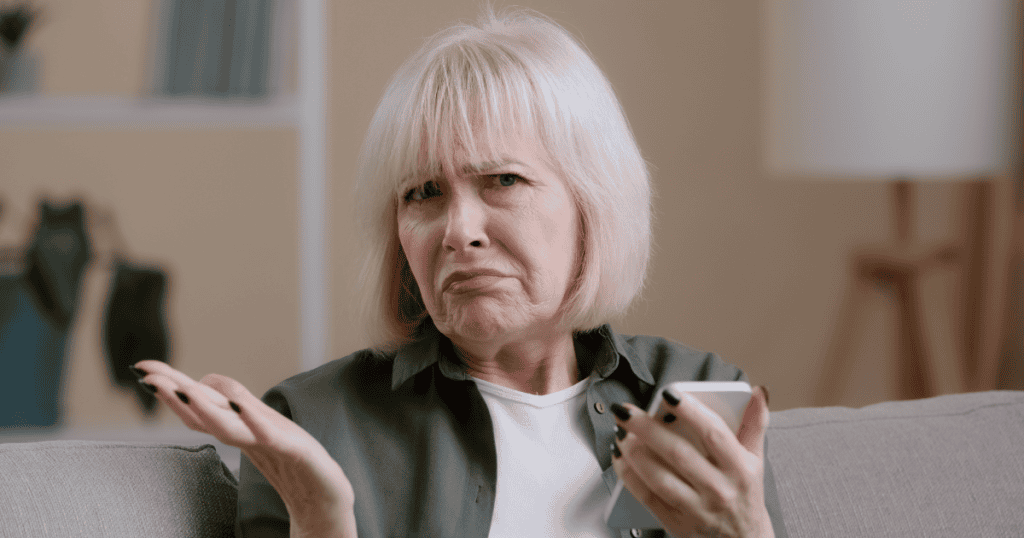
Somewhere underneath the performance, a narcissist wants to know what real closeness feels like.
They watch other people have it.
They see partners who trust each other, friends who show up for one another without keeping score, and something in them registers the loss.
But admitting that longing would mean admitting a need, and a need is exactly the kind of exposure they’ve spent a lifetime avoiding.
So the longing gets covered instead of felt.
My self-absorbed parent did this constantly.
She’d watch a couple who clearly adored each other and call it performative.
She’d hear a friend cry about something painful and call it dramatic, attention-seeking, or weak.
Every dismissal was a way of putting distance between herself and something she couldn’t let herself want out loud.
The more convincingly someone performs indifference to closeness, the more it tells you closeness is exactly what they can’t afford to feel.
The performance isn’t proof they don’t want it. It’s evidence of how badly they do.
What Happens to You When Intimacy Is Consistently Withheld

When closeness is withheld and never explained, the person on the receiving end rarely blames the withholding.
They blame themselves.
That’s not a flaw in how you think.
It’s what the human brain does when it needs a story that makes an unpredictable person feel predictable again.
Research on withheld affection points to real consequences.
Repeated rejection accumulates in the nervous system.
Anxiety builds around what the relationship will look like years from now.
Left long enough, the absence of real connection can settle into depression.
I carried a version of all three.
My narcissistic mother‘s unavailability became the lens I saw myself through.
If she couldn’t get close to me, I assumed there was something about me specifically that made closeness hard to reach.
That question followed me into my twenties.
What made me unlovable.
What I needed to fix, prove, or shrink to finally earn the connection everyone else seemed to get without trying.
It took years to understand the question itself was the wrong one.
What Their Intimacy Avoidance Looks Like Behind Closed Doors

Living with someone like this has a texture you only notice after you’ve left it.
The kiss on the cheek happens on schedule, at the door, in front of people, and it never carries any weight behind it.
The hug lasts exactly as long as a hug is supposed to last, and not a second longer.
Every gesture checks a box. None of them reach anywhere.
I remember the specific feeling of being embraced by my controlling mother and still feeling untouched.
Her arms were around me, and I was still alone in it.
Over time, you adjust.
You stop reaching for more because it only teaches you how far the ceiling actually is.
You stop expecting warmth to arrive on its own.
So you build your emotional life around its absence instead of around any presence that might show up.
That adjustment happens so gradually you don’t notice the moment it becomes permanent.
What started as a disappointment I kept hoping would change eventually became the baseline I measured everything against.
And somewhere in that shift, I lost my own reference point for what real warmth was even supposed to feel like.
The Lonely Charmer They Actually Are

A narcissist can fill a room and still be the loneliest person in it.
My mother was proof of that.
Outside our house, people loved her instantly.
She had the kind of charm that made rooms lean toward her, and everyone assumed a woman that adored must be loved just as deeply at home.
Inside our house, she was unreachable.
The same charisma that drew people in from the outside never once translated into anything real between us.
I used to watch her work a room and think about how none of those people actually knew her. Not the way real closeness requires.
She’d built a hundred surface connections and not one deep one, and some part of her had to know it.
She covered that knowledge by ridiculing anyone who had what she didn’t.
Couples who seemed genuinely close got labeled fake.
Friends who leaned on each other got called dramatic.
Mocking the thing she couldn’t have was easier than admitting she wanted it.
The Truth That Finally Sets the Record Straight

A narcissist’s inability to sit inside real intimacy is a statement about their own psychology.
It was never a verdict on your worth.
I know that now, in a home where closeness doesn’t have to be earned or negotiated for.
Nobody I love makes me perform for their attention. Nobody keeps affection just out of reach to see how hard I’ll work for it.
Warmth here is just warmth. It shows up without conditions attached.
I spent years believing I was too much or not enough to be truly loved.
The truth was simpler than that, and harder to see from the inside.
I was reaching for someone who had decided, long before I ever arrived, that being fully known was a risk he or she was never going to take.
That decision belonged to them.
My worth was never on trial. It just took me a long time to stop treating it that way.
Related Posts:
- 6 Core Beliefs Narcissists Hold That Make Accountability Impossible
- The Only 5 Languages Narcissists Understand When Nothing Else Gets Through
- 7 Things Normal People Learn With Age That Narcissists Are Still Missing in Their 70s
- 5 Myths About Narcissists That Have Been Completely Debunked By Real Science
- How Narcissists Can Tell Who Will Tolerate Their Abuse in Under 60 Seconds