

Few things mess with your mind like watching a narcissist get applauded.
I was newly married when my mother was honored at a fundraiser for a women’s shelter.
A stranger took my hands and told me how lucky I was to have been raised by someone so selfless.
I smiled and thanked her because I had no idea what else to do.
Two days earlier, my mother had called to tell me my husband would leave once he figured out how stupid I was.
She said it in the same warm voice she used at the podium.
Standing in that room, I finally saw the pattern.
My mother needed the crowd to see her as a hero, and she needed me small enough that the story would hold.
If you have ever clapped for someone who hurt you in private, you know that dizziness.
You start to wonder if you are the problem.
You are not.
The hero image and the quiet damage behind it grow from the same need.
Once you understand how that need works, it loses its power to rewrite your reality.
Table of Contents
The Hero Persona Is Built for an Audience, Not for You
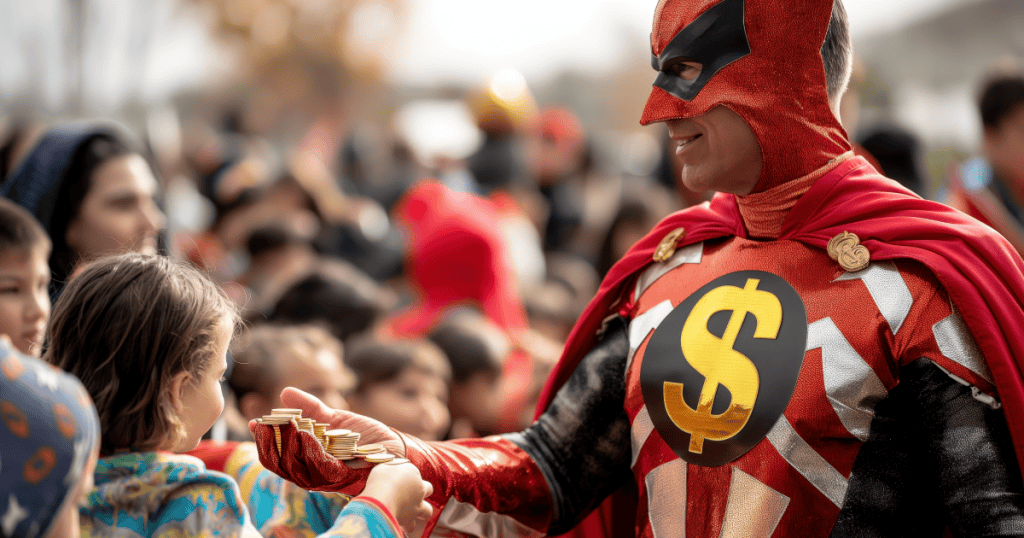
My toxic mother could light up a room the second she walked into it.
She remembered everyone’s birthday and brought homemade food to grieving neighbors.
She laughed in a way that made strangers feel chosen.
When my son was three months old, I brought him to one of her dinner parties.
Her guests passed him around while she told them how she had stayed up nights helping me through my pregnancy.
She had visited me once in nine months.
Later, when he started crying, she followed me into the kitchen and closed the door.
In a flat voice, she told me I was embarrassing her and should have known better than to bring him.
Then she fixed her lipstick and went back out smiling.
I stood by the sink and realized that kitchen door held the whole story.
Everything good about my narcissistic parent happened on the other side of it.
Psychologists have a name for this pattern.
A 2012 study described communal narcissism, where people see themselves as exceptionally kind and helpful and need others to see them that way too.
Their generosity follows the spotlight.
It shows up where it earns praise and disappears where nobody is keeping score.
That is why the people closest to a narcissist so rarely meet the hero everyone else describes.
We live on the side of the door where the performance ends.
Why Being Needed Matters More to Them Than Actually Helping

Narcissists keep a ledger, and they never show you the page with your name on it.
Every favor goes into it.
Every ride, every loan, and every casserole becomes a debt they can call in whenever they need your loyalty or your silence.
Early in my pregnancy, my car broke down for two weeks.
My self-absorbed sister drove me to two prenatal appointments and waited in the parking lot both times.
I thanked her sincerely. I thought that was the end of it.
For the next six months, those two rides came up at every family dinner.
She told the story with a sigh, as if she had carried me to the hospital on her back.
Then I discovered my savings were gone and that she had helped make it happen.
When I confronted her, the first words out of her mouth were about the parking lot.
“After everything I’ve done for you,” she said.
Two car rides had become her receipt for betrayal.
Being needed gives a narcissist something they crave far more than the warmth of helping someone.
It makes them central, and it gives them leverage over people who would otherwise walk away.
Their help is real enough to create guilt and small enough to cost them almost nothing.
If you have ever felt strangely indebted to someone who treats you badly, take a closer look at that ledger.
You may find you paid off the debt years ago.
How the Hero Role Gets Assigned Inside the Family Too

In a narcissistic family, the children become part of the brand.
My mother needed living proof that she had raised an admirable family, so she assigned the roles early.
My sister was the golden daughter, and my younger brother was the prince.
I saw the casting most clearly at one of my mother’s birthday dinners.
She raised her glass and thanked her two greatest accomplishments by name.
My toxic brother stood beside her for photos in the navy suit she had picked out for him that morning.
I was seated near the kitchen, three tables back.
Later that night, I found my brother alone on the patio, loosening his tie.
He said, “Do you know she has never once asked me what I actually want to do with my life?”
That was the first time I understood that the prince had a role to play too.
My mother adored the image of a successful son, and he spent decades trying to fit inside it.
The golden child and the scapegoat are pulled from the same costume closet.
Neither one gets to take the costume off.
I learned that lesson from the cheap seats.
For years, I brought every promotion and every win to my mother like an offering, hoping one of them would finally earn me a chair at her table.
Being loved in that house meant playing your part well. Nobody was ever simply seen.
Why the Mask Never Holds Up Long-Term

Kindness built for an image always has an expiration date.
Researchers who reviewed the science on narcissism and helping found that narcissistic people report being more helpful than others.
Yet they come out less helpful when measured by peer reports or actual behavior.
Their helping tends to be strategic, showing up in public or when there is something to gain, and rarely for purely altruistic reasons.
A 2016 study found the same pattern.
Narcissists were more likely to do good deeds publicly and less likely to do them anonymously.
I watched that research play out in my own family.
For years, my mother treated my sister like her finest achievement.
She paid for my sister’s wedding dress and told every guest at church about it.
In her thirties, my sister’s life in Canada drifted off the script.
Her marriage grew strained, the house was smaller than everyone expected, and the impressive career never arrived.
My mother’s phone calls to her slowed and then mostly stopped.
One Christmas, a family friend asked about my sister’s job, and my mother changed the subject to dessert.
My narcissistic sibling kept performing anyway.
She carried a designer bag she couldn’t afford and apologized for her neighborhood before anyone asked about it.
Watching her, I felt something closer to grief than victory.
She had been raised for applause, and when it faded, she had very little underneath to stand on.
Heroism built for an audience can only survive while the person receiving it keeps making the giver look good.
The Real Cost of Living Alongside Someone Else’s Image

When someone needs the world to see them as a hero, the people closest to them become the storage room for everything that doesn’t fit the picture.
The insults, the cold silences, and the dark moods all have to go somewhere.
In our toxic family, most of them landed on me.
At twenty-nine, I finally tried to tell someone.
I sat across from my aunt at her kitchen table and described the names my mother had called me for most of my life.
My aunt laughed and patted my hand.
She said, “Your mother would give her last dollar to a stranger. You must have misunderstood her.”
I drove home and replayed every memory, searching for the part I had gotten wrong.
That is the hidden cost of living beside a beloved person.
Every time the outside world praises them, you lose a little more trust in your own eyes.
I spent years quietly editing my memories so they would match the version everyone else believed.
Clarity finally came in my late thirties, in a counselor’s office.
She listened to one story and said, “Your mother needed a witness who wouldn’t be believed.”
I cried in my car for twenty minutes afterward.
That single sentence gave every confusing memory a place to land.
For the first time in decades, I trusted what I had seen with my own eyes.
Their Image Was Never the Full Story

Seeing the hero act clearly will not hand back the years you spent doubting yourself.
What it gives you is an explanation, and an explanation is something you can finally build on.
Last month, my husband spent a Saturday morning fixing our neighbor’s fence.
He never mentioned it to anyone, and I only found out because she brought over a pie.
My son asked why his dad hadn’t told us. My husband shrugged and said it just needed doing.
I stood in our kitchen and realized how quiet my life has become. Nobody in my home needs protecting from the truth.
I chose this family, and I guard it with the same energy I once spent guarding my mother’s image.
The people who truly love you show it when nobody is watching. They have no use for an audience.
Related Posts:
- 10 Ways Narcissists Trick Themselves Into Believing They’re Good People
- What Makes a Narcissist So Evil? The Mental Tricks Behind Their Cruelty
- Why Narcissists Only Operate On Self-Preservation And No Integrity
- Does the Narcissist Secretly Hate Themselves? What’s Hiding Behind All That Ego
- 6 Core Beliefs Narcissists Hold That Make Accountability Impossible