
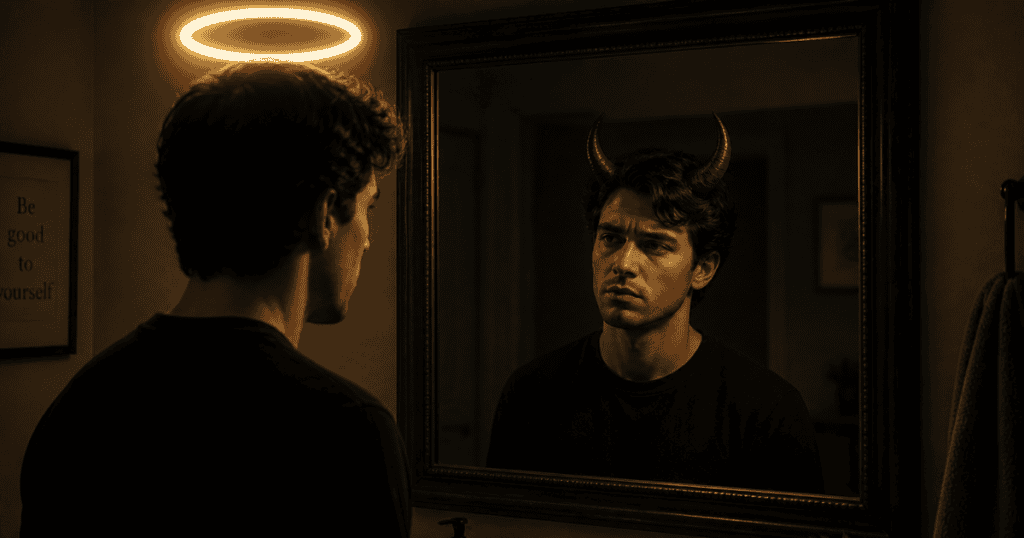
One of the hardest parts of growing up with a narcissist is watching everyone else admire the person who hurt you the most.
People describe them as generous, caring, and devoted.
They tell you how fortunate you are to have someone like that in your family.
You smile politely because arguing feels pointless.
The person they know and the person you know have almost nothing in common.
That was my reality with my narcissistic mother.
Outside our home, she could make almost anyone feel important.
Neighbors praised her kindness, relatives defended her character, and strangers spoke about her with genuine admiration.
Then the front door closed, and everything changed.
The warmth disappeared, and criticism became constant.
I learned to stay quiet because attention usually meant I had done something wrong.
For years, I assumed she knew she was pretending.
But eventually, I realized that many narcissists don’t simply convince everyone else they’re good people.
They spend years convincing themselves.
Every compliment, every public act of kindness, and every rewritten memory becomes another brick protecting the identity they’ve built.
Table of Contents
10 Ways Narcissists Convince Themselves They’re Good People

1. They Make Their Generosity as Public as Possible
Healthy generosity doesn’t need an audience.
For narcissists, however, being seen helping often matters just as much as the help itself.
Public charity, favors, and volunteer work become proof of the identity they want others, and themselves, to believe.
My narcissistic mother loved helping people outside our family.
One afternoon, she spent hours assisting a neighbor, and everyone praised how thoughtful she was.
Minutes after returning home, she criticized me over a minor mistake as though kindness had been left outside with her shoes.
That contrast taught me something important.
The giving wasn’t always fake, but the recognition became part of the reward.
When generosity mainly protects an image, compassion quietly takes second place.
2. They Build a Good Person Persona Online
Social media makes image management remarkably easy.
A narcissist can fill their page with inspirational quotes about family, loyalty, and unconditional love.
Friends see carefully chosen moments and naturally assume those moments represent everyday life.
One morning, my toxic parent shared a heartfelt post about always supporting your children.
Hundreds of people praised her.
Earlier that same day, she had dismissed something I genuinely needed help with.
The post wasn’t necessarily dishonest in her mind.
She had repeated that story for so many years that it became the version she believed.
The online persona slowly replaced honest self-reflection.
3. They Document Family Moments They’re Barely Present For
Pictures capture moments, not relationships.
Narcissists often collect photographs that suggest warmth and closeness, while everyday life tells a completely different story.
Before leaving the house one weekend, my toxic younger brother insisted we take several family photos.
He said that my mother wanted something new to post online.
Everyone smiled until the camera disappeared.
Within minutes, the silence returned, and each of us drifted into separate rooms.
Months later, people commented on how close we looked.
The photographs became evidence of a picture-perfect narcissistic family that mostly existed for other people’s eyes.
4. They Stay Front and Center Wherever There’s an Audience

Some narcissists mistake visibility for virtue.
If they are constantly involved, respected, and recognized, they draw a conclusion.
They convince themselves that those achievements automatically reflect good character.
My mother’s younger sister often talked about how admired my mother was in the community.
I understood why she believed it because she only experienced the public version.
She never witnessed the criticism and emotional distance that filled our home during ordinary days.
Over time, public admiration becomes its own form of evidence.
If enough people applaud them, questioning themselves starts to feel unnecessary.
5. They Let Their Job Title Speak for Their Character
Professional success says very little about how someone behaves behind closed doors.
A respected career can easily become another shield against self-examination.
Teachers, healthcare workers, managers, and community leaders may genuinely excel professionally.
At the same time, they may create fear inside their own homes.
Someone in my toxic family had an excellent reputation at work.
People described this person as patient and dependable, yet I had experienced years of unnecessary criticism from the same individual.
Achievement deserves respect.
But character has to be demonstrated separately.
Narcissists often confuse the two because status protects the version of themselves they prefer to believe.
6. They’ve Believed Their Own Story for So Long It Feels Like Truth
Not every narcissist consciously lies all the time.
Research shows that people with strong narcissistic traits often engage in self-enhancement.
They maintain unrealistically positive views of themselves even when reality contradicts those beliefs.
Instead of adjusting their self-image, they reinterpret events to protect it.
My controlling mother regularly described herself as someone who sacrificed everything for her children.
She sounded completely sincere.
Yet those words never matched the emotional neglect I experienced growing up.
Eventually, I realized I wasn’t arguing with facts alone.
I was confronting an identity she had protected for decades.
Every uncomfortable truth threatened the story she believed about herself, so the story always won.
7. They Frame Their Cruelty as Honesty
“I’m just being honest” is one of the most effective excuses narcissists use.
Healthy honesty considers another person’s dignity.
Narcissistic honesty often becomes permission to criticize without accountability.
My manipulative sister once dismissed weeks of work with a few cutting remarks.
When I calmly told her the comments felt unnecessarily harsh, she insisted someone had to tell me the truth.
She walked away believing she had been courageous.
In reality, she had simply been unkind.
By redefining cruelty as honesty, narcissists avoid questioning their toxic behavior while continuing to see themselves as principled people.
8. They Rewrite Every Story Until They’re the One Who Was Wronged

Accountability rarely survives a narcissist’s version of events.
Details disappear, motives change, and before long, the original issue becomes almost impossible to recognize.
One afternoon, my narcissistic brother blamed me for a problem he had created.
When I explained what had actually happened, the conversation shifted toward my supposed attitude instead.
Soon, my mother joined in, and everyone was discussing my reaction rather than his behavior.
That pattern repeated itself for years.
Once the narcissist becomes the victim, self-reflection is no longer necessary.
9. They Measure Their Goodness Against People Who Are Struggling
Instead of comparing themselves with healthy standards, narcissists often compare themselves with people having a harder time.
“I’ve never done that.”
“At least I stayed.”
“At least I work.”
Those comparisons provide quick reassurance without requiring personal growth.
I noticed my mother doing this whenever relatives faced difficulties.
Rather than expressing concern, she highlighted how much better she handled life.
Looking back, those conversations weren’t really about the relatives.
They were about protecting her own self-image.
Confident people evaluate themselves by their values.
Insecure people look for someone doing worse.
10. They Keep a Running Tab of Every Good Thing They’ve Ever Done
Few phrases reveal narcissistic thinking more clearly than “After everything I’ve done for you.”
Every favor becomes an investment expected to produce lifelong gratitude.
When I once explained why one of my mother’s comments had hurt me, she immediately listed things she had done years earlier.
The discussion stopped being about respect and became an inventory of debts she believed I still owed.
That moment changed how I viewed kindness.
Real generosity doesn’t keep receipts.
Narcissists often do because their good deeds serve as evidence supporting the identity they desperately want to preserve.
What Every Single One of These Is Really About

All ten behaviors point toward the same goal.
Narcissists don’t simply want to be seen as good people.
They need to believe it themselves.
Maintaining that belief may require selective memories, public performances, constant comparisons, or carefully managed appearances.
I saw different versions of these behaviors in my mother and toxic siblings.
The methods changed, but the motivation stayed remarkably consistent.
Each person protected an image that mattered more than honest self-reflection.
Recognizing that pattern answered questions I had carried for years.
People weren’t seeing the same person I lived with every day.
They were seeing the version carefully designed for public view.
The Audience Got the Performance. You Got the Truth.

One of the most freeing decisions I ever made was stopping my mission to convince everyone else.
The people outside my home saw selected moments.
I experienced the ordinary days when the performance ended.
That difference gave me something more valuable than validation.
It gave me clarity.
Their carefully protected image was never created because of you.
It existed to protect them from facing themselves.
Once you understand that, you no longer need other people to confirm the reality you already survived.
Related posts:
- 7 Ways a Narcissist Quietly Destroys Their Own Home (While Looking Like the Good Guy)
- 6 Steps To Follow If You Want to Make It Work With a Narcissist
- 9 Hobbies Narcissists Fake Just to Impress People
- How Narcissists End Their Lives When The Charm Finally Runs Out
- The One Thing a Narcissist Does Right Before They Disappear for Good