

Leaving a narcissist is often described as the beginning of a new chapter.
But very few people talk about how strange that beginning can feel.
The biggest surprises rarely arrive during life-changing moments.
They appear while standing in front of your wardrobe and realizing you no longer know which clothes genuinely reflect who you are.
You look at shirts, dresses, and jackets you’ve owned for years, yet choosing what to wear suddenly feels unfamiliar.
This is because you can’t separate your own preferences from the opinions that shaped them.
For a long time, many survivors don’t dress according to what they enjoy.
They dress according to what attracts the least criticism.
They choose outfits that won’t invite accusations of seeking attention or another conversation about how they should look.
Those adjustments happen so gradually that they feel like personal preferences rather than survival strategies.
That is why getting dressed after leaving isn’t a small thing.
Long before you rebuild your confidence, you often begin rebuilding your identity through the decisions you make every morning.
What you wear becomes one of the first places where you decide who you want to be.
Will you continue carrying the version of yourself they created?
Or will you begin rediscovering the woman who existed before someone else’s voice became louder than your own?
Table of Contents
Narcissistic Abuse Doesn’t Just Steal Your Confidence, It Changes How You Physically Show Up in the World

Narcissistic abuse changes much more than the way you think.
It changes the way you physically move through the world.
Your appearance gradually becomes another area where you try to avoid conflict instead of expressing yourself.
Over time, many narcissistic abuse survivors stop asking whether they like something.
They begin asking whether wearing it will trigger another uncomfortable interaction.
That conditioning develops through hundreds of small moments.
A narcissist criticizes your hairstyle one week, laughs at your outfit the next, then complains that you never make enough effort.
The standards constantly change, making it impossible to feel confident regardless of what you choose.
My narcissistic mother had a way of making me question myself without raising her voice.
One afternoon, I walked past her wearing a blouse I genuinely liked.
She looked at me and casually asked whether I was trying to impress someone.
The comment lasted only a few seconds, but I spent the rest of the day wondering whether I had made the wrong choice.
Looking back, I realize the blouse was never the issue.
The goal was to make me doubt my own judgment.
That toxic pattern repeated itself often enough that I stopped trusting my instincts.
Instead of choosing clothes because they reflected my personality, I chose whatever felt emotionally safest.
My wardrobe slowly filled with decisions based on avoidance rather than preference.
Many women assume this is simply low self-esteem, but the reality is more complex.
Narcissistic abuse teaches you to monitor yourself constantly.
You become hyperaware of how much space you occupy and whether someone will find another reason to criticize you.
The way you present yourself reflects the story you believe about your own value.
If someone spends years convincing you that you’re too loud, too plain, or never quite enough, those beliefs stay with you.
They eventually influence every choice you make before leaving the house.
That is why so many survivors mistake trauma responses for personality traits.
They believe they naturally prefer blending into the background.
When in reality, they simply learned that visibility came with emotional consequences.
After You Leave, Standing in Front of Your Wardrobe Feels Like Meeting a Stranger

One of the quietest losses after narcissistic abuse is realizing how much of yourself disappeared without you noticing.
Most people expect healing to involve rebuilding confidence.
Very few expect to discover they no longer know what they genuinely like.
That realization often appears in ordinary moments.
You open your wardrobe before work or before meeting a friend, and suddenly every outfit feels unfamiliar.
Some clothes remind you of criticism.
Others remind you of trying to earn approval that never came.
Even your favorite pieces no longer feel like yours.
You can’t remember whether you actually loved them or simply learned they caused the fewest negative comments.
My jealous sister had an opinion about almost everything I bought.
If I chose something colorful, she called it childish.
If I bought something simple, she said I looked boring.
Eventually, I stopped shopping for clothes I enjoyed.
I started shopping for clothes that were least likely to become another conversation.
Several months after creating distance from my narcissistic family, I stood in a fitting room holding two dresses.
Then I caught myself asking a question I hadn’t asked in years.
Which one do I actually like?
The question surprised me.
I had become so accustomed to filtering every decision through someone else’s opinions that my own preferences no longer came naturally.
That moment taught me something important.
Narcissistic abuse doesn’t just make you doubt yourself.
It teaches you to outsource your identity.
You become so focused on managing another person’s reactions that you slowly stop paying attention to your own.
That is why leaving the narcissist often feels disorienting.
Freedom doesn’t immediately restore your sense of self.
It simply allows you to discover it again.
One Saturday morning, I found a scarf hidden at the back of my wardrobe.
My mother used to tease me whenever I wore it because she thought it looked too dramatic.
I stopped wearing it without ever asking myself whether I still liked it.
That morning, I wore it anyway. Nothing remarkable happened.
The only thing that changed was realizing how many ordinary choices had never truly belonged to me.
What You Put On Every Morning Is Either Carrying Their Story or Starting Your Own
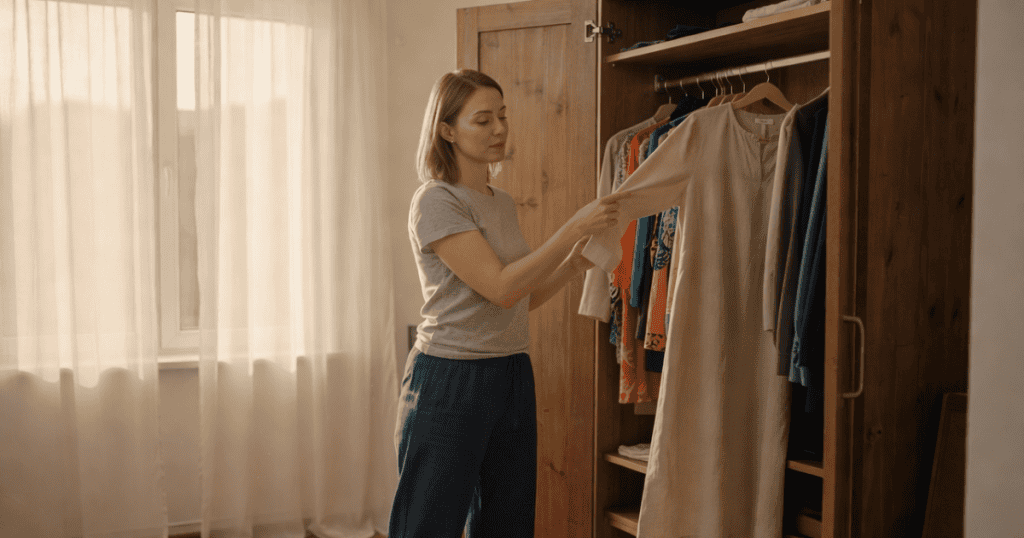
Most people assume clothing only changes how other people see them.
Psychologists have found that it also changes how we see ourselves.
Researchers call this enclothed cognition, the idea that what we wear influences our confidence, attention, and behavior.
That matters far more than most survivors realize.
Every morning begins with a choice.
You can continue dressing according to the rules you learned while surviving narcissistic abuse.
Or you can begin making choices that reflect the person you’re becoming.
Those rules often remain long after the narcissist is gone.
Without realizing it, you continue choosing clothes that help you disappear.
This is because your nervous system still believes staying small is the safest option.
I noticed this one morning while getting ready for work.
My hand reached for the plainest outfit in my wardrobe because it felt familiar.
Instead, I wore a blazer I had avoided ever since my controlling brother joked that I looked like I was trying too hard.
His comment lasted seconds, but its influence lasted years.
Putting on that blazer didn’t magically heal everything I had experienced.
It reminded me that I no longer needed permission to look the way I wanted.
I walked into work with better posture and contributed more confidently during meetings.
The shift happened because I interrupted an old pattern instead of repeating it.
Recovery from narcissistic abuse rarely happens through dramatic breakthroughs.
More often, it happens through ordinary decisions that slowly teach your brain a different story.
Each morning becomes another opportunity to ask yourself an important question.
Are you getting dressed according to the identity they assigned to you, or according to the woman you are finally becoming?
Getting Dressed for Yourself Is One of the First Daily Acts of Reclaiming Who You Are
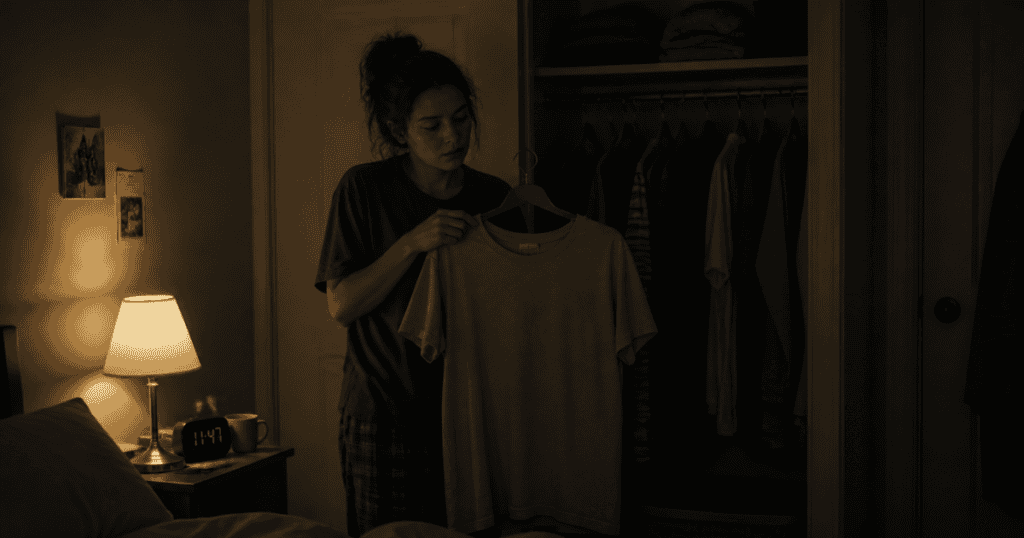
Choosing what to wear each morning may seem insignificant.
But for someone who spent years living by another person’s expectations, it becomes one of the first opportunities to practice freedom.
For the first time in a long time, the decision belongs entirely to you.
That freedom can feel surprisingly uncomfortable because many survivors discover they no longer know how to choose for themselves.
I experienced that on an ordinary weekday before meeting one of my cousins for coffee.
I changed my clothes several times because I couldn’t stop wondering what someone else would think.
Then I realized the only person who needed to like the outfit was me.
That small realization changed the way I approached getting dressed.
Instead of asking whether someone else would approve, I started asking whether I felt comfortable, confident, and authentic.
The answer didn’t always come easily, but those small choices gradually became evidence that my own opinion mattered again.
Healing from narcissistic abuse rarely announces itself in dramatic ways.
Sometimes it looks like buying a jacket because you genuinely love the color.
Sometimes it looks like wearing jewelry that has been sitting untouched in a drawer for years.
Sometimes it looks like walking past a mirror without immediately searching for flaws.
Each decision quietly reinforces the same truth.
Your preferences and identity matter.
Getting dressed becomes much more than a routine. It becomes a daily act of reclaiming yourself.
They Used Your Appearance as a Weapon. Here’s How You Take That Territory Back

One of the most effective ways narcissists maintain control is by convincing you that your appearance always needs their approval.
Sometimes they criticize what you wear.
Other times, they criticize your weight, hair, makeup, or the way you carry yourself.
They do this to make sure you never feel completely comfortable in your own skin.
After hearing those comments long enough, you begin doing their job for them.
You criticize yourself before anyone else has the chance.
That voice often survives long after the relationship ends.
My toxic sibling once laughed when I wore bright lipstick before leaving the house.
He asked whether I thought I was famous enough to wear something that noticeable.
I quietly wiped it off before getting into the car.
Looking back, what hurts isn’t the comment itself, but how quickly I believed his opinion mattered more than mine.
That is how narcissistic conditioning works.
It teaches you to reject yourself before someone else can.
Taking your appearance back begins with recognizing those comments for what they really were.
They were tools of control, not statements of truth.
Once you understand that, you stop dressing to avoid criticism or prove someone wrong.
You begin choosing clothes because they reflect your personality and the life you’re building.
That is how you reclaim the territory they once controlled.
The Woman You’re Getting Dressed for Now Has Always Been There

Getting dressed may seem like a small part of recovery, but it represents something much bigger.
Every morning gives you another opportunity to choose yourself instead of the version of yourself that survived someone else’s control.
The clothes matter far less than the decision behind them.
When you begin dressing according to your own preferences instead of someone else’s criticism, something changes.
You remind yourself that your identity no longer belongs to the person who tried to reshape it.
I eventually realized I wasn’t becoming a different woman after leaving my narcissistic family.
I was returning to the woman I had always been before years of manipulation taught me to disappear.
She never stopped existing.
She simply needed the freedom to take up space again.
Related posts:
- How I Stopped Feeling Invisible After Narcissistic Abuse (and Became Magnetic as Hell)
- Why Narcissists Tear Down Attractive People (And How to Reclaim Your Starlight)
- The Hidden Cost of Forgiving a Narcissist
- The One Thing a Narcissist Does Right Before They Disappear for Good
- What Happened to a Narcissist Before You Came Along That Explains How They Treated You