

People often assume that a broken home falls apart because everyone inside failed each other equally, but that was never my experience.
Sometimes the person who causes the most damage is also the one who appears the most admirable to outsiders.
I grew up in a house that looked nearly perfect from the outside.
My mother could smile, joke, help neighbors, and leave people convinced she was generous and kind.
People spoke about her with admiration and respect.
Inside our home, however, she slowly dismantled every sense of safety I had.
I was called stupid, ugly, lazy, and useless so often that I eventually stopped arguing with those words and began to believe them.
The breakdown of our home did not happen all at once.
It unfolded quietly, through repeated interactions that slowly reshaped how everyone inside lived.
Over time, we stopped feeling safe and started focusing on survival.
For years, I believed it was my responsibility to fix what was broken.
I tried harder, stayed quieter, apologized more quickly, and carried emotional burdens that were never mine to carry.
Looking back now, I can clearly see the patterns that slowly pulled our home apart.
Recognizing these patterns brings a powerful realization.
It was never your responsibility to hold everything together, and it was never your fault that it fell apart.
Table of Contents
The 7 Ways a Narcissist Destroys the Home They Built

1. They Save Their Best Self for Strangers
One of the most painful realizations when growing up with a narcissist is understanding that they are fully capable of kindness.
Yet they choose not to extend it to their own family.
My controlling mother could spend time laughing warmly with neighbors.
She would speak kindly to others, only to walk through our front door and become distant and critical.
The warmth she showed others disappeared quickly, and suddenly, my presence seemed to irritate her.
My voice, questions, and even my existence felt like a burden to her.
I noticed this contrast long before I understood what narcissism was.
I remember watching her praise another child for being bright and beautiful.
Then she would criticize me harshly shortly afterward for a small mistake.
The difference in how she treated others compared to how she treated me was impossible to ignore.
People outside our home believed they knew her because they only saw the version she chose to present.
The version we lived with inside the house was entirely different.
This is what makes the experience so confusing and painful.
It is not that they cannot be kind. It is that they decide their family does not deserve that kindness.
Once you understand this, you stop searching for a version of yourself that might finally earn their approval.
Why? Because that version never existed.
2. They Protect Their Reputation Before Their Relationships
A healthy person prioritizes relationships, while a narcissist prioritizes appearances.
These priorities shape everything that happens within the home.
Growing up, my mother’s reputation seemed more important than anything happening inside our toxic family.
She wanted others to admire us, but she showed little interest in making sure we actually felt safe or supported.
Whenever I tried to explain what life was really like, people immediately defended her.
They insisted she would never behave that way because she seemed so kind and thoughtful.
Hearing those responses was deeply painful because it reinforced the idea that my reality did not matter.
Her public image had already been carefully constructed, and my private experiences could not compete with it.
Children raised in a narcissistic environment like this learn early that appearances matter more than feelings.
Over time, enabler family members stop questioning whether something is wrong.
Instead, they focus on maintaining the illusion that everything is fine.
This is how a home becomes a performance rather than a place of safety.
3. They Stay Loyal to the Family That Raised Them Instead of the One They Created

Another painful pattern is the way many narcissists remain loyal to the dysfunctional systems they grew up in.
Even when it harms the family they have created.
Throughout my traumatic childhood, I saw how certain family members were consistently protected, regardless of their behavior.
The family image always came first, and those who caused harm were defended repeatedly.
When I needed support, I often found myself blamed instead.
If I asked for fairness, I was labeled difficult.
If I pointed out favoritism, I was called disrespectful.
If I expressed exhaustion, I was seen as ungrateful.
Over time, I realized I was not just dealing with one person’s behavior but with an entire system built on denial.
That realization helped me understand something I could not see as a child.
They were not choosing the truth. They were choosing familiarity.
For some narcissists, maintaining loyalty to a dysfunctional system feels safer than acknowledging that it was ever broken.
4. They Create Loneliness Even in a Full House
Loneliness is not determined by how many people are present but by how emotionally available they are.
Our house was rarely empty, yet I often felt invisible.
When I needed comfort, I usually found it outside the home.
A family friend became someone who listened to me without judgment and showed genuine care.
That experience felt unfamiliar because it was not something I received at home.
Within our house, attention often came only when something was wrong.
Being ignored sometimes felt safer than being noticed.
Children do not need perfect parents, but they do need consistent emotional presence.
Without that, a home can feel empty regardless of how many people live there.
Growing up in that kind of environment creates a deep sense of isolation that can follow someone into adulthood.
5. They Drain the Most Loving Person

In many narcissistic households, one person ends up carrying emotional responsibilities that do not belong to them.
This role often falls on the most empathetic individual.
I took on that role early in life.
I learned to anticipate everyone’s moods and tried to prevent conflicts before they escalated.
I apologized for things I did not cause and worked to keep everyone else comfortable.
I remember situations where I was expected to manage someone else’s emotional outbursts, even when they had nothing to do with me.
Afterward, no one asked how I felt or acknowledged the toll it took on me.
This pattern continued for years.
The person who is most willing to care often ends up carrying the heaviest burden.
This is because they are the least likely to refuse it.
This is often mistaken for love, but it is actually emotional exploitation disguised as responsibility.
6. They Teach Children a Distorted Version of Love
Children learn what love looks like by observing the relationships around them.
When those relationships are unhealthy, children internalize those patterns.
If a child repeatedly sees one parent being criticized, dismissed, or treated poorly, they begin to accept that behavior as normal.
That was my experience.
Criticism felt familiar, walking on eggshells felt responsible, and working for small amounts of approval felt like love.
It took years for me to recognize how distorted those beliefs had become.
Some children raised in these environments adopt similar narcissistic behaviors because they associate power with safety.
Others become fearful of relationships because love has always felt unpredictable.
Both outcomes are shaped by the same environment.
Without intervention, these patterns often continue into adulthood, affecting friendships, careers, and future families.
7. They Create a Culture of Silence

The final pattern is silence.
In many narcissistic homes, everyone understands what is happening, but no one is allowed to speak about it.
People learn which topics are off-limits and which behaviors must be ignored.
When I eventually stopped pretending everything was normal and began to speak honestly, I was labeled as the problem.
I was accused of causing conflict and holding onto the past.
Nothing about the situation had changed except my willingness to acknowledge it.
Narcissistic families often fear exposure more than dysfunction.
Silence protects the person causing harm while placing the responsibility on others to maintain the illusion.
Over time, this silence becomes deeply ingrained and allows the cycle to continue across generations.
Why None of It Was Ever Yours to Fix
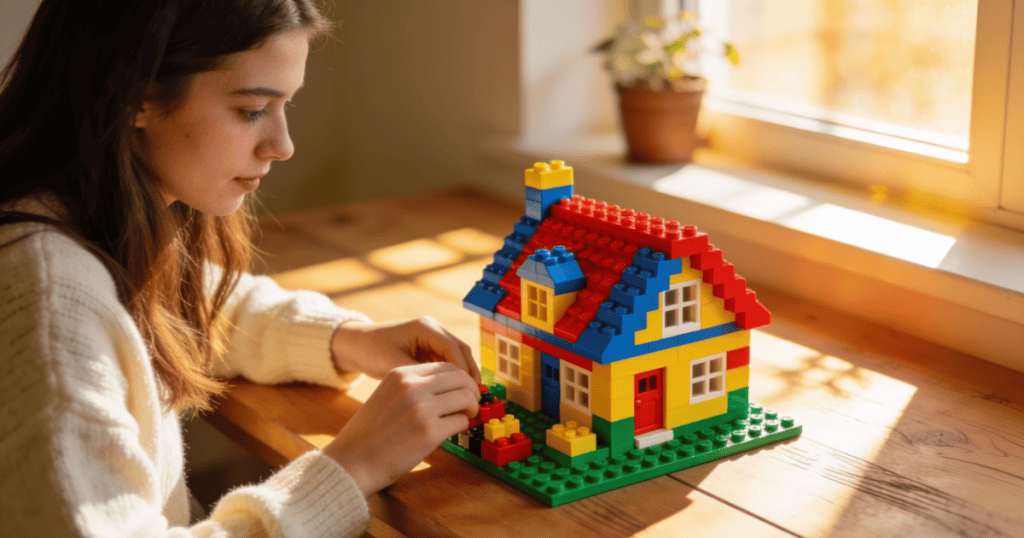
Recognizing these patterns changes how you understand your role in the situation.
Instead of asking why you could not fix the relationship, you question whether the other person ever wanted a healthy one at all.
For years, I analyzed everything I did, searching for the right words or actions that might lead to change.
Nothing worked because the issue was never a lack of effort or love on my part.
It was a system designed to maintain control.
Once you understand that, you stop investing energy in trying to repair something that someone else continues to damage.
Letting go of that responsibility is not giving up, but choosing to direct your energy toward something healthier.
You Don’t Have to Rebuild the House You Grew Up In

A narcissistic home does not fall apart because everyone failed equally.
It falls apart because the person responsible for maintaining it undermines its foundation over time.
Today, my life is very different.
The home I have built with my husband, my son, and the people who genuinely care about me is not perfect, but it is safe.
We do not have to measure our words or anticipate someone else’s moods.
Peace is not something we earn. It is something we maintain together.
This reminds me that I did not inherit a permanent condition.
I inherited an example of what I did not want to become.
Instead of rebuilding what was broken, I chose to create something better.
No matter what kind of home you grew up in, you can make that same choice.
Related posts:
- How to Turn the Table on a Narcissist in Your Family: It’s Time to Use Their Own Games Against Them
- 5 Negative Narcissistic Family Cycles That I Will NOT Continue With My Son
- Why Society Protects Toxic Families And Silences The Ones Who Escape?
- How Narcissists Can Tell Who Will Tolerate Their Abuse in Under 60 Seconds
- 8 Reasons You Feel Guilty Leaving a Narcissist Even When It’s the Only Right Thing