

For years, I genuinely believed the problem was me.
I thought that if I became more patient, less emotional, and somehow easier to love, everything would finally work out.
Like many scapegoats, I spent years shrinking myself.
I apologized for things that were not my fault and swallowed my anger before it could be expressed.
I took on responsibilities that belonged to others.
Yet despite all that effort, it was never enough.
The realization hit me hard because it forced me to confront something I had spent years avoiding.
The game had been rigged from the start.
One afternoon, after another conflict with my sister, I found myself rereading old messages.
As I looked through them, I noticed a pattern I could no longer ignore.
Every disagreement ended the same way.
It did not matter how carefully I explained myself or how much accountability I accepted.
The outcome never changed because the goalposts always moved.
That was the moment I understood the full weight of what had been happening.
What I had mistaken for love, loyalty, and family was actually a set of unwritten rules, and I was the only person expected to follow them.
Table of Contents
There Were Unwritten Rules, and Nobody Told You About Them

Long before I encountered narcissistic dynamics in adulthood, I had already been conditioned for them.
I was the scapegoat in my family.
My older sister was the golden child, and my younger brother was protected.
Meanwhile, I seemed to enter the world as a disappointment before I had even developed a sense of self.
Much of my childhood was spent being raised by a family friend.
My narcissistic mother simply was not present in the ways a mother should have been.
The lessons I learned were not taught directly. They were taught through repetition.
Whenever I expressed an opinion, tension followed.
Whenever I had needs, they were treated as inconveniences.
Whenever I showed individuality, conflict seemed to appear.
I remember excitedly sharing an idea about something I wanted to pursue.
Before I could finish speaking, my mother dismissed it and redirected the conversation toward my sister’s accomplishments.
Nobody questioned it.
The conversation simply continued as though I had never spoken.
Experiences like that may seem insignificant on their own, but together they create a blueprint.
By the time I reached adulthood, I had become highly skilled at abandoning myself.
I believed I was being mature and accommodating, but in reality, I was simply performing the role I had been trained to play since childhood.
6 Steps Every Narcissist Needs You to Master

1. Give Up Who You Are
The first requirement is giving up your sense of self.
Narcissistic systems function best when your identity remains flexible enough to accommodate everyone else’s needs.
As a child, I learned to edit myself constantly.
I remember disagreeing with my mother about something minor and immediately feeling the atmosphere change.
The punishment was not yelling or confrontation.
It was disapproval, distance, and emotional withdrawal.
That experience taught me that having an opinion carries consequences.
Over time, I learned to soften my reactions, filter my thoughts, and become whoever created the least friction.
The same pattern followed me into adulthood.
I adjusted my preferences to match other people’s expectations and convinced myself that self-sacrifice was a sign of emotional maturity.
Looking back, much of what I called maturity was actually a survival strategy.
When self-erasure becomes normal, giving up pieces of yourself feels responsible rather than destructive.
That is precisely why narcissists find it so useful.
2. Stop Having Any Needs
The second step is learning that your needs do not matter.
Being raised by someone else while my mother remained emotionally absent taught me a confusing lesson about love.
Nobody explicitly told me my needs were unimportant, but repeated experiences communicated that message clearly enough.
Children learn what they can expect from relationships based on what happens consistently.
I learned not to expect support, consistency, or reliability because disappointment felt more predictable than care.
I remember sitting alone with a problem after school.
Experience had already taught me that asking for help would likely lead nowhere.
Eventually, that became my default approach to life.
As an adult, I often abandoned my own needs before anyone else had the chance to reject them.
I expected little, required little, and tolerated far too much.
While this strategy reduced conflict, it also attracted people who benefited from one-sided relationships.
When someone is conditioned to survive on emotional scraps, they become vulnerable to people who offer little more.
3. Distance Yourself From Everyone Who Might See It Clearly

Isolation is one of the most effective tools in any narcissistic dynamic.
This is because the people who love you are often the people who can recognize what is happening.
When I moved to Canada, I experienced something I had rarely felt growing up.
I built friendships, joined a basketball team, and gained confidence.
I discovered what it felt like to be valued for who I was rather than for the role I played.
Ironically, the stronger I became, the more tension developed with my jealous sister.
My success seemed to threaten someone who needed me to remain beneath her.
At the time, I did not fully understand what I was witnessing.
But later I realized it foreshadowed the isolation tactics that would appear throughout my life.
Narcissistic systems depend on controlling the narrative.
Supportive people disrupt that control because they reflect reality back to you.
I still remember a cousin asking me a simple question after hearing about a conflict with my narcissistic family.
“Why are you apologizing for something you didn’t do?”
The question stayed with me because healthy people often see what we cannot see ourselves.
That is why toxic individuals work so hard to separate you from those who care about you.
Once the mirrors are removed, manipulation becomes much easier to sustain.
4. Go Emotionally Invisible
Growing up, my toxic mom‘s moods determined the emotional climate of the household.
Everyone adjusted accordingly.
Before entering a room, I would instinctively assess the atmosphere.
Was she irritated, critical, or looking for someone to blame?
Over time, I became highly skilled at reading the room and hiding my reactions.
I learned how to remain neutral when hurt, appear unaffected when angry, and suppress emotions before they became visible.
As a child, those skills helped me survive.
As an adult, they became liabilities.
Healthy people interpret emotional restraint as self-control.
Unhealthy people often interpret it as permission.
When your discomfort never appears on the surface, some people assume there is no limit to what you will tolerate.
I learned this repeatedly in family interactions.
The more invisible I became emotionally, the more certain people pushed.
What had once protected me in childhood eventually encouraged unhealthy behavior in adulthood.
5. Accept Blame for Everything

Scapegoats often develop an unhealthy relationship with responsibility.
This is because they spend years carrying blame that does not belong to them.
For a long time, I approached conflicts with my narcissistic sibling from that mindset.
I wanted to understand her perspective, explain myself clearly, and repair the relationship.
Even after betrayals that should have ended the conversation, I continued searching for ways to make peace.
Meanwhile, the campaign against me grew.
Stories changed, motives were assigned to me, and relatives began viewing me through a distorted lens.
Instead of questioning the accusations, I questioned myself.
That is what happens when you have spent a lifetime being blamed.
False accountability begins to feel normal.
Gaslighting becomes especially effective because it lands on ground that has already been prepared.
I remember rereading messages simply to confirm events I knew had happened.
The fact that I felt compelled to verify my own reality was deeply unsettling.
When someone has already been trained to doubt themselves, manipulation becomes far easier to maintain.
6. Be Willing to Give Up Everything
The final step is also the most expensive because eventually the checklist demands everything.
Over the years, I surrendered far more than I realized at the time.
I lost savings, relationships, opportunities, and nearly my entire extended family.
After the betrayal, most of my relatives disappeared from my life, while my mother seemed almost pleased to watch me struggle.
The losses were not only external.
I lost confidence, trust in my own judgment, and at times even my ability to distinguish reality from the narratives being imposed on me.
The most painful losses were psychological.
I surrendered ambitions, energy, peace of mind, and momentum.
For years, I believed that if I complied a little more, explained myself a little better, or sacrificed a little further, things would improve.
Eventually, I understood the truth.
No amount of compliance would ever be enough, not for anyone operating from the same playbook.
The checklist was designed to be impossible because impossible standards guarantee permanent control.
What Mastering Every Step Actually Costs You
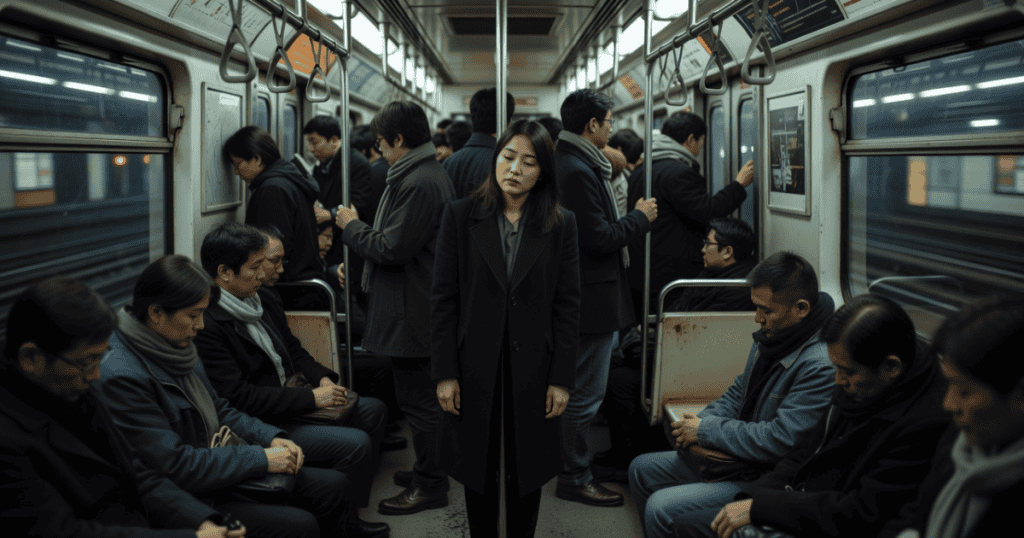
After four years of healing from narcissistic abuse, I have had plenty of time to take inventory of what these dynamics cost me.
The obvious losses were easy to identify.
The more serious damage took longer to uncover.
One of the strangest realizations was that I no longer knew what I genuinely liked or wanted.
My preferences had been shaped for so long by managing other people’s reactions that I struggled to identify my own.
Healing was not a dramatic breakthrough.
It was a series of small discoveries that gradually rebuilt my sense of self.
Each boundary, preference, and act of self-trust helped me reconnect with the person I had spent years abandoning.
I walked away from my sister and from every toxic person connected to that dynamic.
In doing so, I stopped participating in a system that required my self-destruction.
The first thing that returned was peace.
Then came clarity, confidence, and eventually a stronger sense of identity.
Beneath all the conditioning, the scapegoat role, and the endless attempts to manage other people’s realities, I found myself again.
The Checklist Had No Finish Line, That Was Always the Point

Every step on this checklist can look like love when you are trapped inside the system.
In reality, each step is simply another payment toward a debt that can never be satisfied.
That understanding changed everything.
I rebuilt my life with a loving husband, a thriving son, and a successful business.
I have a home in a neighborhood my mother and siblings would never stop thinking about.
Yet the greatest victory was not success, but clarity.
Once you can see the checklist for what it is, the scan no longer works.
You recognize the pattern immediately, and when you can spot it from a mile away, you have no intention of picking up the pen.
Related posts:
- 5 Unpopular Emotions That Tell a Narcissist You’re No Longer Their Target
- 16 Things Narcissists Hate the Most (And Why Each One Exposes Them)
- 5 Ways Narcissists Accidentally Create the Version of You They Can No Longer Manipulate
- The Only Three People Who Can Make a Narcissist Act “Respectful”
- 5 Passive-Aggressive Moves Narcissists Use When They Feel Ignored (Backed By Research)