

For a long time, I thought I was doing everything right.
I went no-contact and learned the terminology.
I could explain trauma bonds, gaslighting, scapegoating, emotional neglect, and narcissistic family systems with ease.
I read books, listened to podcasts, and filled notebooks trying to make sense of what had happened.
So why did I still feel like the same person who grew up in that house?
That was the question I couldn’t answer.
The hardest part wasn’t the abuse itself. It was what happened afterward.
Years after leaving, I still reacted to situations that had nothing to do with my family.
If someone sounded slightly disappointed, I’d immediately start explaining myself.
If a text went unanswered, I’d feel a wave of panic.
Even a minor disagreement could leave me bracing for rejection.
Intellectually, I knew my parent wasn’t there anymore, and I knew I was safe.
Yet my body seemed to believe something entirely different.
For years, I interpreted that as failure.
I assumed that if I understood enough about what had happened, the reactions would eventually stop.
However, trauma and developmental research suggest a different explanation.
Many of these patterns were formed before language, before self-awareness, and before we could make sense of our experiences.
Instead of being stored as conscious narratives, they became embedded in survival systems that operate largely outside conscious awareness.
That’s part of what makes recovery from narcissistic abuse feel so difficult.
Table of Contents
Why I Was Still Reacting Like I Lived in That House, Even After I Left
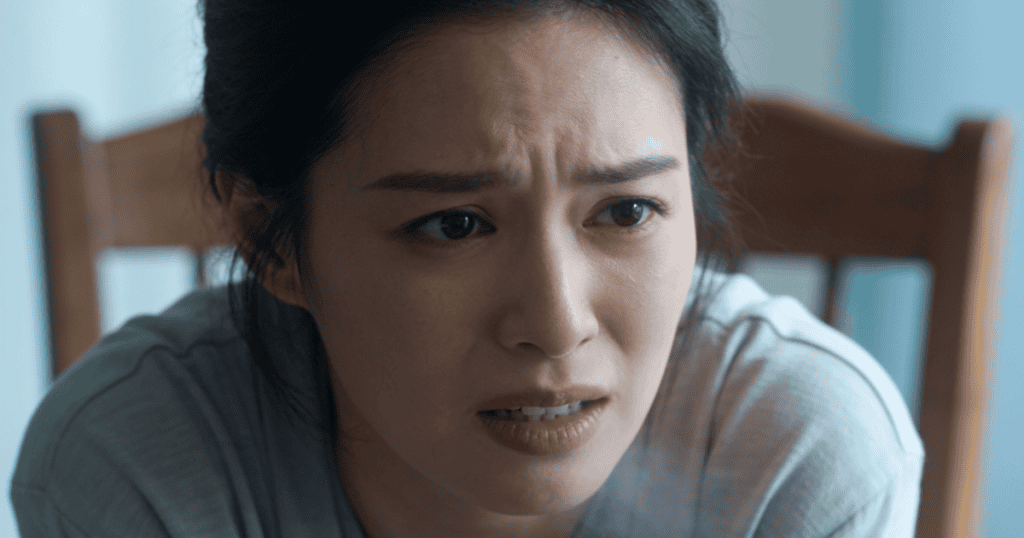
Years after going no-contact with my narcissistic family, I sent a work project to someone whose opinion I respected.
A few hours passed without a response, which should have been completely unremarkable.
Instead, my stomach dropped.
My mind immediately started scanning for mistakes.
Had I done something wrong? Had I offended them? Should I send another message to clarify what I meant?
Nothing had actually happened.
There was no criticism, no conflict, and no evidence that anything was wrong.
Yet I was already preparing for impact.
What frustrated me most was that I understood exactly where the reaction came from.
I knew about hypervigilance and narcissistic family systems.
I knew about childhood scapegoating.
And still, for a moment, I felt exactly like the child who grew up in that house.
That experience captures one of the most confusing aspects of narcissistic abuse recovery.
The reaction often arrives before the thought.
Your body flinches before your mind understands why.
You brace yourself before you’ve consciously identified a threat.
You begin engaging in safety behaviors before you’ve determined whether safety is actually needed.
Understanding that distinction changed the way I viewed healing.
What the Research Says About Why These Patterns Last

One of the most influential studies on childhood adversity is the Adverse Childhood Experiences (ACE) Study.
It found that emotional abuse, emotional neglect, and dysfunctional family environments can have effects that extend well into adulthood.
These early experiences may shape mental, emotional, and even physical well-being later in life.
This isn’t simply about remembering painful experiences.
It’s about development.
During childhood, the brain is learning fundamental lessons about safety, relationships, belonging, and self-worth.
Children aren’t just collecting memories.
They’re building the framework through which future experiences will be interpreted.
Attachment theory helps explain this process.
Researchers John Bowlby and Mary Ainsworth proposed that children develop internal working models.
These are deeply ingrained templates that shape how they understand relationships, closeness, rejection, and themselves.
These models operate largely automatically.
You don’t consciously decide that love must be earned.
You don’t deliberately choose to fear abandonment.
You don’t intentionally assume responsibility for everyone else’s emotions.
Over time, those beliefs become part of the operating system.
This is why insight alone often isn’t enough.
Understanding a pattern and changing a pattern are not always the same thing.
Trauma researcher Dr. Bessel van der Kolk distinguishes between declarative memory and implicit memory.
Declarative memory includes experiences you can consciously recall and describe.
Implicit memory includes emotional reactions, habits, bodily responses, and conditioned patterns that operate automatically.
As a result, you can fully understand a fear response and still experience it.
The issue isn’t that you’re recovering incorrectly.
It is that the reaction exists in a system that logic alone doesn’t directly change.
You Were Shaped Before You Had Words to Defend Yourself

One of the hardest truths for me to accept was that some of the deepest conditioning happened before I could understand it.
What got stored wasn’t necessarily a story.
It was a feeling, an expectation, and ultimately an emotional blueprint.
The brain is highly adaptable during early childhood.
Long before children develop sophisticated language, they learn through repeated experiences.
They learn what happens when they express needs, make mistakes, or take up space.
Through thousands of interactions, the nervous system begins deciding what is safe and what is dangerous.
Research on fear conditioning suggests that this kind of learning can occur without conscious awareness.
This is because it relies on memory systems that don’t require language or deliberate thought.
That’s why some of the deepest patterns can feel impossible to remember.
There may be no clear memory to retrieve because what remains is the pattern itself.
In my toxic family, I eventually became the scapegoat.
The message wasn’t always spoken aloud, but I learned that conflict somehow found its way back to me.
I learned that expressing hurt often created more problems and that being visible carried risks.
Whether those lessons were intentional matters less than their impact.
The role helped stabilize the family system, but the cost was that I learned to stay small.
The Beliefs a Scapegoat Often Carries Into Adulthood
The beliefs that emerge from these environments often sound simple:
- I am too much.
- I am not enough.
- Love must be earned.
- My needs are a burden.
These beliefs of a scapegoat rarely appear as conscious thoughts. Instead, they show up as behaviors.
If I believe I am too much, I stay quiet when something hurts me.
If I believe I am not enough, I overwork and overexplain.
If I believe love must be earned, I keep giving long after reciprocity disappears.
If I believe my needs are a burden, I care for everyone except myself.
For years, I thought these were personality traits.
I assumed I was naturally accommodating, naturally anxious, and naturally self-sacrificing.
In reality, many of those behaviors were adaptations.
Internal working models become the lens through which later relationships are filtered, quietly shaping expectations, choices, and reactions.
You don’t see the template itself. You see the life it creates.
Why No-Contact Removes the Person but Not the Programming
No-contact can be life-changing because it creates safety, stops ongoing harm, and provides space for healing.
But it doesn’t automatically erase narcissist conditioning.
That was one of the hardest realities for me to accept.
The person was gone, but the response remained.
I remember apologizing repeatedly to a manager who had never once raised their voice at me.
I wasn’t responding to them so much as I was responding to a pattern.
My nervous system had carried an old lesson into a completely different environment.
That’s how conditioned responses work.
The source disappears, but the affected brain continues applying the same rules elsewhere.
That’s why recovery can feel so confusing.
You leave the environment expecting the symptoms to disappear, only to discover that they came with you.
Understanding What Happened and Being Free of It Are Different Things

One of the most painful stages of recovery is realizing that awareness has limits.
You can identify every manipulation tactic, and understand exactly what happened, yet still find yourself reacting.
For years, I believed understanding would automatically create freedom.
I thought that if I could just figure everything out, I would stop feeling it.
But insight and conditioning operate differently.
As van der Kolk’s work suggests, declarative memory and implicit memory are not the same thing.
Knowing where the leak is doesn’t repair the pipe.
You can accurately identify a trauma response while still experiencing it.
That doesn’t mean you’re failing.
It means you’re dealing with an injury that extends beyond conscious understanding.
This is one reason Complex Post-Traumatic Stress Disorder (CPTSD) is such a useful framework.
Prolonged relational trauma differs from a single traumatic event.
This is because it affects identity, emotional regulation, relationships, and the way a person experiences themselves.
The injury becomes woven into everyday functioning, which is why recovery often takes longer than people expect.
What Changes When You Work Where the Pattern Lives

The breakthrough for me came when I stopped trying to think my way out of every reaction.
For years, I searched for a missing memory that would explain everything.
Eventually, I realized that for some of the earliest layers, there may be no memory to uncover. There is only the imprint.
The work became learning to recognize the pattern while it was happening.
I began noticing the tightening in my chest, the urge to overexplain, the reflex to apologize, and the feeling that I needed permission to exist.
Instead of arguing with the response, I became curious about it.
What was my nervous system trying to accomplish?
What danger did it think it was preventing?
What old rule was operating underneath the reaction?
I do have childhood memories connected to some of these patterns, and they helped me understand certain themes.
But they weren’t magical answers. They were clues.
The real shift happened when I stopped treating recovery as purely an intellectual project.
I started recognizing it as a nervous-system process.
The goal was to notice the pattern and respond differently when it appeared.
That’s where change began. Slowly, repeatedly, and in everyday life.
You Survived What Was Designed to Keep You Small

Today, those patterns still appear sometimes. The difference is that they no longer run my life.
I catch the urge to overexplain sooner.
I recognize misplaced guilt more quickly, speak up when something feels wrong, and spend less time trying to earn the right to exist.
None of that happened through willpower alone.
It happened through learning to work with the responses where they actually lived.
The most important thing I’ve learned is that the patterns running in the background are not your identity.
They are evidence of adaptation and survival.
They are the strategies that helped you navigate an environment that asked you to become smaller than you were.
And beneath those conditioned responses is something that was never broken in the first place.
A version of you the conditioning never reached.
Related posts:
- 8 Typical Trauma Responses You’ll Face After Narcissistic Abuse
- 7 Therapies to Heal Trauma From Narcissistic Abuse For Good
- Why Therapy Alone Doesn’t Always Heal Narcissistic Abuse
- 5 “Healthy” Coping Habits That Actually Keeping You Stuck After Narcissistic Abuse
- 7 Patterns Resilient People Have After Healing From Narcissist Trauma