
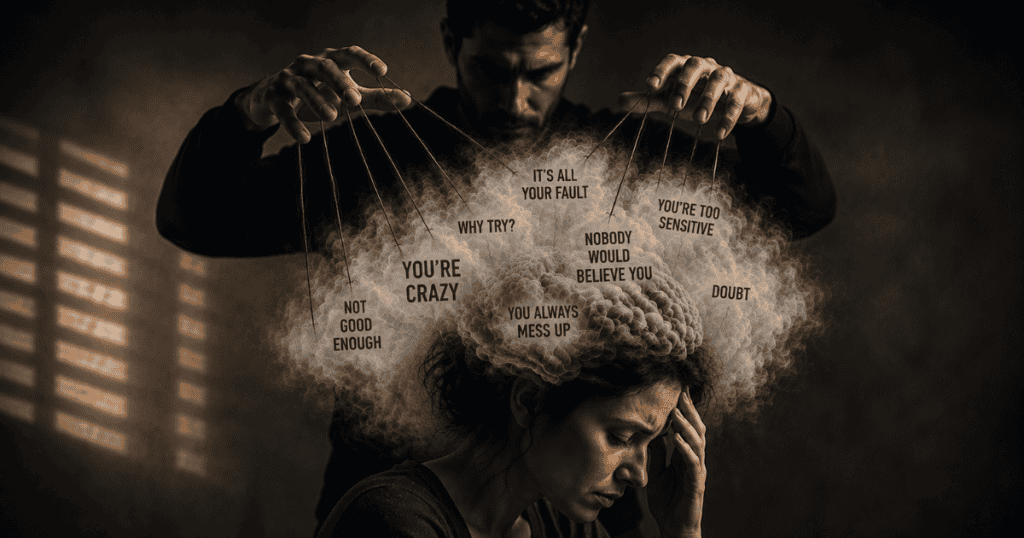
There is a private fear many survivors carry long after the abuse has stopped.
It is not only the fear that what happened was real, but the fear that it permanently damaged something inside their own mind.
You read the same sentence three times and still cannot remember what it said.
You walk into a room and forget why you went there.
Someone asks you a simple question, and your thoughts feel strangely inaccessible.
For a long time, I wondered whether I had somehow lost the sharpness I used to have.
Growing up with my narcissistic mother and siblings meant my brain was constantly tracking their moods and tones.
I was always watching for reactions and warning signs.
I could notice a change in my mother’s voice, wonder what my sister’s silence meant, and still keep an eye on my brother’s behavior.
This is because any of them could change the atmosphere.
There was very little mental space left for simply existing.
What I eventually understood changed how I viewed those years.
My brain was not failing me. It was adapting to what it had been asked to survive.
Table of Contents
Your Brain Wasn’t Breaking Down, It Was Doing Its Job

A brain living inside chronic unpredictability begins prioritizing whatever seems necessary for survival.
Narcissistic abuse survivors often interpret the consequences of prolonged stress as evidence that something is fundamentally wrong with them.
I used to think my difficulty concentrating meant I had become less intelligent.
If I could not remember a conversation clearly or organize my thoughts quickly, I assumed I was losing an ability I once had.
But my brain had been given a completely different assignment.
Instead of focusing only on ordinary responsibilities, part of my attention was constantly asking questions about the people around me.
What mood is my mother in?
Is my sister irritated?
Has my brother’s behavior changed?
Is something about to happen?
That kind of monitoring consumes mental resources.
When your brain is scanning for danger, it is not necessarily failing at focus.
It is focusing on something else.
Research on chronic stress and the brain supports this idea.
Stress can produce changes in neural circuits involved in threat detection, memory, emotional regulation, and decision-making.
Some of those changes can represent adaptation to prolonged environmental demands.
That does not mean chronic stress is harmless.
It means the symptoms survivors experience should not automatically be interpreted as evidence of permanent cognitive failure.
My brain was responding to the environment it had learned to navigate.
It had become extremely good at detecting what might happen next.
That ability often came at the expense of concentration, calm, and mental clarity.
What Chronic Stress Was Actually Doing Inside Your Brain
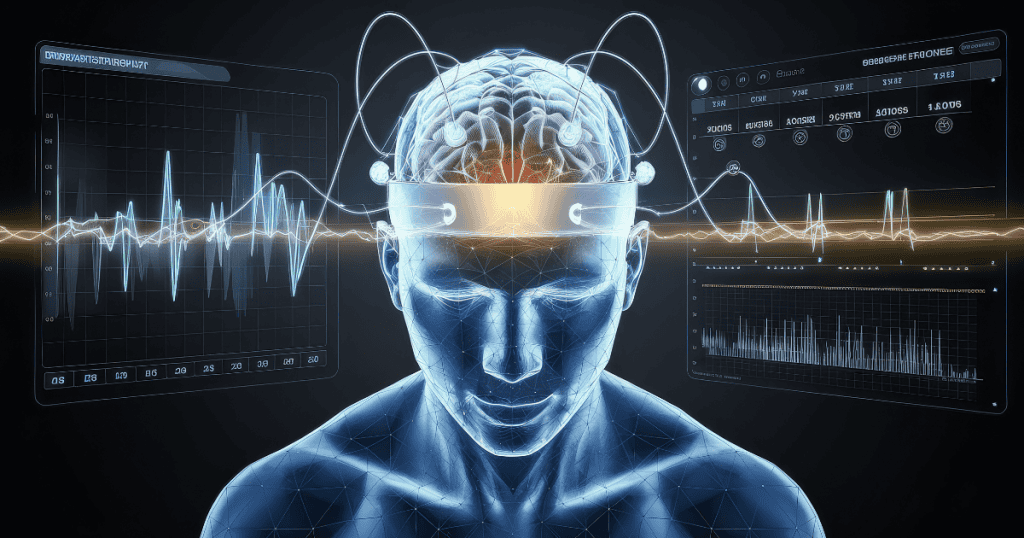
Cortisol is one of the hormones involved in the body’s stress response.
When stress becomes prolonged, repeated activation of these systems can influence brain regions like the hippocampus, amygdala, and prefrontal cortex.
The hippocampus plays an important role in memory and learning.
Chronic stress has been associated with changes in hippocampal structure and function.
This can contribute to difficulties with memory and concentration.
The amygdala is heavily involved in detecting potential threats.
Under prolonged stress, threat-related systems can become more reactive, leaving the brain more prepared to notice danger.
The prefrontal cortex helps with reasoning, planning, attention, and decision-making.
Chronic stress can interfere with its ability to regulate emotional and threat-related responses effectively.
This combination can create an experience that feels deeply confusing.
You may know you are intelligent, yet struggle to think clearly during stressful interactions.
You may have excellent memory for some things, yet forget conversations that happened during periods of intense emotional pressure.
You may be capable of making complicated decisions at work while becoming completely overwhelmed by a simple interaction at home.
That does not mean your intelligence disappeared.
Your brain was allocating its resources differently.
A 2017 study described stress-related changes in the brain as a form of plasticity.
This means that the nervous system can change in response to the conditions it experiences.
Their work emphasizes that stress-related neural remodeling can be adaptive and that some of these changes can be reversible.
Your brain protected itself under difficult conditions.
It did not simply destroy itself.
The same brain that adapted to prolonged stress can also adapt to prolonged safety.
Why Every Symptom You Had Was Actually Protection

Brain fog can be terrifying when you do not understand why it is happening.
There were times when I could read something and immediately lose track of what I had just read.
I would become frustrated because I knew I understood the material.
Yet my attention seemed to disappear when too much was happening around me.
Looking back, it makes sense that my mind struggled to process ordinary information.
So much of its attention was already occupied with monitoring people.
Dissociation can serve another protective function.
When an experience becomes overwhelming, psychological distance can reduce the intensity of what is happening in the moment.
Hypervigilance has an equally understandable purpose.
My brain became very good at noticing small changes inside the household.
A shift in my narcissistic mother‘s tone could make me more alert.
My jealous sister‘s behavior could tell me that I needed to be careful.
My brother’s position in the dynamic could change the atmosphere before anyone had openly said anything.
I was constantly collecting information.
At the time, I did not think of it as a survival strategy.
I simply thought I was overly sensitive and always thinking too much.
That interpretation was wrong.
My brain had learned that small signals sometimes mattered.
Memory problems can also become especially confusing for survivors.
You may remember the emotional reality of an experience more clearly than the exact sequence of words or events.
Prolonged stress can interfere with attention and memory processes, making it harder for the brain to calmly encode and retrieve information.
This is one reason I stopped judging myself so harshly for the years when my memory felt unreliable.
I was not careless. I was overwhelmed.
I was not weak because I became hyperaware of other people’s moods.
I had learned that awareness could help me stay ahead of what might happen next.
These symptoms were never proof that I was incapable.
They were signs of a brain working extraordinarily hard under conditions it was never meant to sustain forever.
How to Stop Running Survival Mode in a Life That’s Finally Safe

Healing is often described as though you simply need to think differently, concentrate harder, or decide that the past no longer matters.
That explanation never felt realistic to me.
You cannot simply order your brain to stop expecting danger after years of learning that danger can appear without warning.
Your brain needs evidence.
It needs repeated experiences that contradict the old expectations.
A quiet morning, a disagreement that does not turn into punishment, and a mistake that does not lead to humiliation can all become evidence.
Over time, those experiences give your nervous system information that the old environment is no longer the environment you live in.
That is why healing can feel frustratingly slow.
We often expect one breakthrough to undo years of conditioning, but the brain frequently changes through repetition.
Safety becomes meaningful when it happens consistently enough for your brain to stop treating it as an exception.
My own healing took about four years.
There was no single morning when I suddenly became the person I thought I had lost.
Instead, the changes accumulated quietly.
I noticed that certain conversations no longer occupied my entire day.
I could hear a change in someone’s voice without immediately trying to determine what I had done wrong.
I could make a decision without mentally calculating how my mother or toxic siblings might respond.
Those moments seemed ordinary, but they were not ordinary to me.
They were evidence that my brain was learning something new.
The peace you experience after leaving chronic emotional chaos is not merely emotional relief.
When safety becomes consistent, your brain has more opportunity to direct attention toward ordinary life instead of constantly preparing for the next threat.
That is part of what makes recovery so significant.
You are not forcing yourself to become someone completely different.
You are giving your brain enough safety to stop organizing everything around danger.
The Brain That Survived Them Is the Same Brain That Brought You Here

The mind you feared was permanently damaged is the same mind that kept you functioning through years of instability.
It noticed things other people missed.
It recognized patterns and adapted quickly.
It found ways to keep going when there was no perfect way to respond.
I think about that differently now.
For years, I looked at my hypervigilance, brain fog, and constant mental calculations as evidence that something had gone wrong inside me.
Now I can see that those responses developed for a reason.
My brain was trying to protect me with the information and strategies it had available.
And when life became safer, it did not need to stay organized around the same threats forever.
That is the part survivors need to remember.
The brain is capable of change in both directions.
The same mind that learned survival can learn safety.
You were never broken.
You were organized around survival, and the life you have built since is proof that the reorganization has already begun.
Related posts:
- 5 Phobias Narcissists Fill Your Brain With (So You Can Never Speak Up)
- Narcissistic Grooming: How Narcissists Brainwash & Condition Their Victims
- The Science Behind Why Narcissistic Abuse Can Feel So Impossible To Recover From
- 10 Nonverbal Abuse Tactics Narcissists Use to Control You
- 21 Silent Alarms Your Body Sends When a Narcissist Is Around