

Growing up in a narcissistic family doesn’t just steal your childhood. It confuses your sense of self.
You learn to read faces before you learn to read books.
You memorize emotional weather patterns, like the sharp intake of breath before an explosion, the silence that follows disapproval.
You even recognize the exaggerated laugh that hides a threat.
I didn’t realize how deeply this shaped me until my coworker gently told me, “You don’t have to over-explain. It’s fine.”
I smiled, but my chest tightened. Why did a simple reassurance make me tear up?
Later, I understood.
My entire adult personality, the constant explaining, apologizing, and fixing, was built on survival, not authenticity.
Every “I’m sorry” was a plea for safety, not humility.
Every achievement was proof that I deserved to exist.
Healing as an adult means learning who you are beyond those survival roles.
It’s not becoming someone new, but finally meeting the person you were always meant to be.
Table of Contents
Ask the Real Question

Children of narcissistic parents often grow up playing roles instead of forming identities.
We become who we need to be, not who we are.
For me, that role was the fixer.
One morning, I was in my narcissistic mother’s kitchen making her breakfast.
She sat at the table, criticizing my sister for being “lazy and ungrateful.”
My reflex kicked in. Defend, soothe, mediate.
I said, “She’s just busy, Mom. Maybe she’ll visit next weekend.”
My mother sighed theatrically, “Always making excuses for her. You’ll end up like her someday, alone and disappointing.”
I froze.
My instinct was to smile, stay calm, and keep her mood balanced. But inside, something shifted.
That night, I lay in bed replaying the scene.
For the first time, I asked myself, “Why am I always trying to manage her emotions instead of my own?”
It was a terrifying question because it meant facing the truth, that I’d built my entire adult identity around someone else’s comfort.
The fixer. The peacekeeper. The invisible one.
These aren’t personality types. They’re survival masks.
If you find yourself exhausted by being “the responsible one,” “the strong one,” or “the one who keeps everyone together,” pause.
Ask yourself, “Do I still want to live this way?”
That discomfort you feel after asking? That’s your true self waking up.
Rewire How You Read Your Emotions
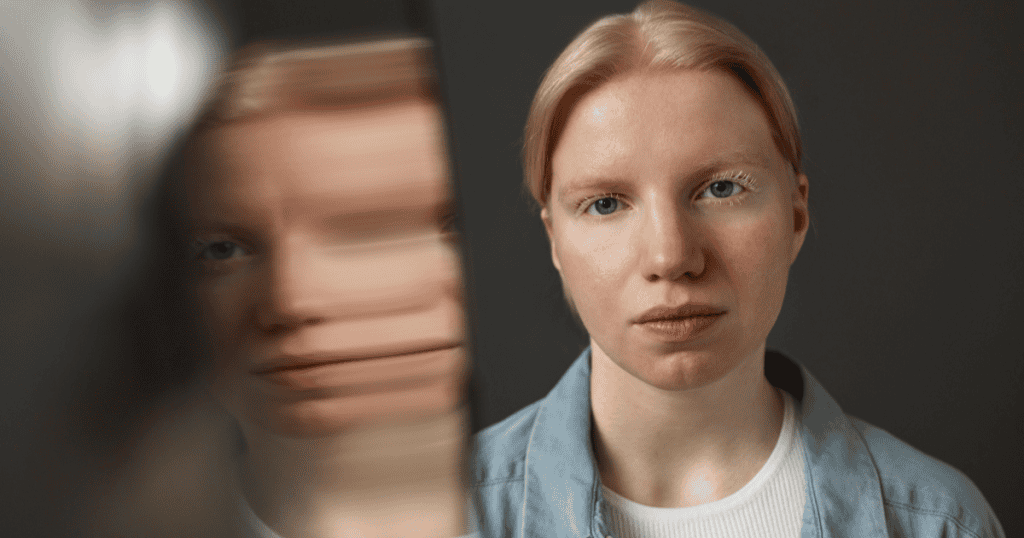
When you grow up under chronic criticism, your body learns to treat safety and tension as the same thing.
You mistake anxiety for intuition because fear once kept you safe.
One afternoon at work, my boss disagreed with my proposal during a meeting.
“Let’s try a different direction,” she said calmly.
But my heart started racing. My brain instantly went to: “She hates it. I messed up. I’m in trouble.”
That spiral pulled me back to the memory of my toxic mom’s cold eyes whenever I disappointed her.
The silent treatment, the door slamming, and the weeks of walking on eggshells all came rushing back.
That’s how trauma conditioning works.
Your body doesn’t care whether you’re in a meeting or in your childhood living room. It only recognizes patterns.
Now, when that panic hits, I do something simple but radical.
I pause and breathe. Then I ask, “Is this fear coming from the present, or from the past?”
Sometimes, fear is an old memory disguised as a warning.
There was another time, during dinner with my husband, when he said, “I think you’re overworking again.”
My stomach clenched. Old instincts whispered, “He’s criticizing you.”
But when I looked at him, his face was kind.
That was him taking care of me rather than attacking me.
It took me years to understand that not all disagreement equals danger.
Rewiring emotional perception isn’t about numbing yourself. It’s about finally learning which feelings belong to now.
That’s how you rebuild trust with your own body, by letting it know that the war is over.
Release the Shame Story

Survivors of narcissistic families often carry a quiet shame: the belief that they’re “behind” in life.
Everyone else seems to glide through adulthood. Confident, unshaken, capable.
Meanwhile, you’re googling “how to make decisions without anxiety” at 2 a.m.
I felt that deeply when I was twenty-eight, standing in a furniture store trying to pick a sofa for my first apartment.
I called my cousin for advice, and she said, laughing, “Why is it such a big deal? Just pick one.”
But for me, every decision felt like a test.
Growing up, choices weren’t mine to make, and if I did make one, it was usually “wrong.”
That day, I finally chose the sofa I wanted.
But it wasn’t about furniture. It was about freedom.
Later, my cousin confessed that her mother, another narcissist in the family, still calls her every week to micromanage her life.
She laughed it off, but I could see the same doubt in her eyes, the same fear of being wrong.
That’s when I realized that we weren’t late to adulthood.
We were learning how to be adults without ever having a model.
Every time I set a boundary, every time I say, “I’ll figure it out,” I’m reclaiming a milestone our family never reached.
You’re not behind. You’re finally living at your own pace, not the pace of someone who demanded control over your life.
That’s not failure. That’s cycle-breaking.
Redefine What Safety Means

In a narcissistic family, “safety” often meant silence.
It meant staying small, agreeable, invisible.
Real safety feels foreign at first because peace feels uncomfortable when you’ve only known control.
I learned this the hard way when I told my aunt I was limiting contact with my self-absorbed mom for my mental health.
She gasped. “Oh, but you can’t do that! Family is everything. You’ll regret it.”
Her words carried the same undertone I grew up with: keep the peace, no matter the cost.
That used to be my definition of safety.
Avoiding conflict.
But avoidance is not safety. It’s silence wearing a disguise.
Now, I define safety differently.
It’s when my body exhales, when my truth doesn’t make me panic, when I can tell someone “no” and still feel whole.
For me, safety looks like quiet mornings spent journaling and cooking dinner with my husband without having to defend my choices.
It’s laughing with my cousins who know the truth and love me anyway.
You don’t find safety in people who demand your silence.
You build it, gently, with people and places where your nervous system finally gets to rest.
Safety isn’t something you’re given. It’s something you create.
Normalize the Awkward Start

Healing from narcissistic abuse isn’t elegant.
It’s awkward, clumsy, and filled with small victories that no one claps for.
One of my most humbling moments came when I started setting boundaries with my sister.
We were sitting on my couch, scrolling through photos on her phone.
She made a snide comment about my “dramatic” therapy posts online.
Normally, I would’ve laughed it off, eager to prove I wasn’t too sensitive.
But this time, I looked at her and said, “You don’t have to understand my healing, but I need you to respect it.”
The silence that followed was deafening.
I thought she’d mock me or leave. But she just shrugged and said, “Fine.”
It wasn’t graceful. My hands trembled after she left.
But that shaky sentence was the first time I didn’t betray myself for peace.
That’s what the start of healing looks like. Awkward courage.
You might overthink text messages, fear saying “no,” or avoid opportunities because you don’t want to “get it wrong.”
That’s not regression. That’s learning how to stand.
You weren’t given a blueprint for adulthood.
Feeling unsure doesn’t mean you’re failing. It means you’re finally free from control.
Confidence isn’t the starting line. Courage is. And courage feels messy at first.
The Truth About Reclaiming Your Identity

Sometimes, healing feels like rebuilding a home without a floor plan, one memory at a time.
I remember cleaning out an old box from my childhood closet.
Inside were drawings, journals, and small trinkets. Pieces of who I was before I became the family’s emotional caretaker.
A crayon drawing caught my eye. It was of a girl standing on a stage, smiling.
I had written, “I want to be a teacher someday.”
I stared at it for a long time.
That girl was bold. Creative. Unfiltered.
I realized I’d buried her under decades of fear. The fear of being “too much,” “too loud,” or “too proud.”
Now, I’m letting her speak again.
Healing isn’t just cutting ties, but reviving the parts of you that were silenced.
You’ll start remembering what you love, what excites you, what feels like you.
Maybe it’s painting again, or applying for that job. Maybe it’s laughing loudly without waiting for permission.
That’s how you reclaim your adult identity.
Not by building a new you, but by remembering the one you left behind.
Healing from narcissistic family dynamics isn’t about becoming “better.” It’s about becoming real.
You start replacing survival with authenticity, fear with curiosity, silence with truth.
You start choosing peace over performance.
Reclaiming your adult identity means releasing the illusion that your worth depends on how well you please others.
It means redefining love, not as something you earn, but as something that flows both ways.
Sometimes I still hear my mother’s voice in my head, or feel that instinct to apologize for existing.
But I remind myself that that voice isn’t mine. It’s an echo.
And every day that I live differently, that echo gets quieter.
You’re not behind nor broken. You’re finally becoming you.
Related posts:
- Collective Narcissism: The Hidden Family System That Shields Abusers
- 7 Phrases I Used to Put My Narcissistic Family In Their Place Without Raising My Voice
- How I Reparented Myself After Leaving My Narcissistic Family (And Finally Felt Safe in My Own Skin)
- 3 Rules That Ended My Role as Family Therapist to My Narcissistic Family
- Why Cutting Off My Narcissistic Family Was Better Than Any Therapy?


Thank you so very much for sharing your wisdom, experiences, strength and hope! Thank you for sharing practical, clear, easy to understand steps and how to’s!!!
You’re welcome! I’m glad you found the article useful.