

There is a quiet truth many daughters carry for decades without language or permission.
Not every mother is safe, and not every childhood was protected.
Some of us grew up in homes where danger didn’t look like bruises or abandonment, but like a constant pressure to be someone else to be tolerated.
We learned early that love could be withdrawn, reshaped, or weaponized, and that survival often meant silence.
Growing up, I didn’t lack a mother in the literal sense.
She was always there, managing, directing, and watching.
Yet emotionally, she was unreachable, sealed behind her moods, her needs, and her narratives.
I remember standing in the doorway of my childhood room.
I held a school paper I was proud of, already rehearsing how small to make my excitement so it wouldn’t irritate her.
That was the pattern: longing for warmth while learning to self-edit just to exist peacefully.
Narcissistic mothers don’t wait until their daughters are adults to cause harm.
They wound the little girl first, shaping her nervous system, self-concept, and expectations of love.
Those wounds don’t disappear with age. They echo, quietly and relentlessly, for decades.
Table of Contents
9 Ways a Narcissistic Mother Emotionally Damages Her Daughter

1. She Made Everything About Herself
In our house, every emotional moment bent toward my narcissistic mother like gravity.
If I was sad, she was more wounded by my sadness than I was allowed to be.
If I was excited, her stress, exhaustion, or sacrifices quickly became the focal point.
I learned that timing my needs around her moods was not optional but necessary for peace.
Her crises always took center stage, even in moments that belonged to me.
When I struggled at school, the conversation somehow became about how hard my behavior made her life.
She also imparted how embarrassing it was for her and how much she had already endured.
Over time, I stopped bringing things to her because I knew the cost.
Living in her shadow trained me to shrink instinctively.
I learned to anticipate her emotional weather, downplay myself before she could feel eclipsed, and to survive by being low-maintenance.
That self-erasure didn’t disappear in adulthood.
It followed me into boardrooms, friendships, and decisions where my voice hesitated long before my mind did.
2. She Invalidated Your Feelings
Whenever I expressed an emotion, it was either incorrect, exaggerated, or inconvenient.
If I cried, I was told I was too sensitive.
If I was angry, I was accused of being dramatic or disrespectful.
If I felt hurt, she explained why I shouldn’t.
There was always a correction waiting, delivered with certainty and authority.
I once sat on the edge of my bed one afternoon after my toxic brother had humiliated me in front of neighbors, trying to explain why it hurt.
She cut me off mid-sentence, reframing the entire incident as my misunderstanding and his intention as harmless.
To her, my reaction is the real problem.
I walked away unsure not just of my feelings, but of my perception.
That toxic pattern taught me to distrust my inner world.
As an adult, emotions felt unreliable, something to interrogate rather than honor.
Even now, when something feels wrong, there is a reflex to search for external validation before believing my own experience.
3. She Used Guilt to Control You
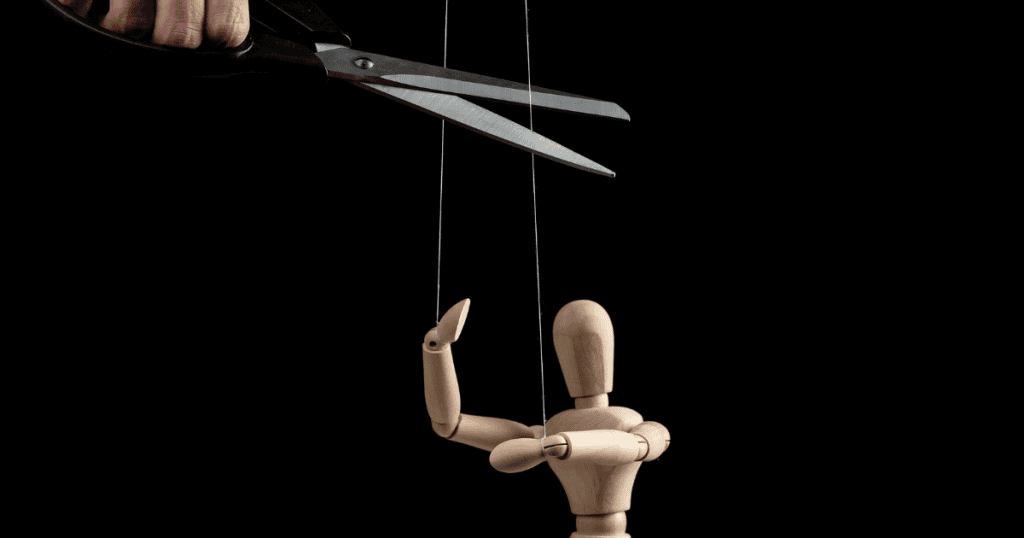
Independence was never celebrated. It was treated as betrayal.
Whenever I pulled away, guilt appeared immediately.
She framed obedience as loyalty and distance as cruelty, making it clear that love was proven through compliance.
I remember preparing to spend a weekend with my cousins, one of the few places I felt relaxed and unseen.
She stood in the hallway, reminding me of how lonely she would be or how ungrateful it was to choose anyone else.
I went anyway, but the guilt followed me like a shadow.
That narcissistic conditioning made choosing myself in adulthood feel dangerous.
Even small acts of self-prioritization triggered an internal alarm, as if autonomy itself were a moral failure.
Guilt became the leash that kept me tethered long after I physically left.
4. She Never Truly Cheered You On
There were no loud celebrations nor uncomplicated pride.
Success was met with muted reactions, subtle dismissals, or toxic comparisons that drained the moment of joy.
Sometimes there was indifference.
Other times, there was a strange tension, as if my achievement threatened something fragile in her.
When I received recognition at school, she skimmed the certificate, then redirected the conversation to how stressful her week had been.
Years later, when I shared a professional milestone, her response was a cautionary warning about arrogance, wrapped in concern.
I learned quickly that being seen could provoke withdrawal or subtle punishment.
Success began to feel unsafe.
As an adult, I noticed how often I minimized wins, how uncomfortable praise made me, and how visibility felt like exposure rather than validation.
Celebration had been conditioned as a risk.
5. She Never Took Accountability

Apologies were nonexistent.
When harm occurred, it was either denied outright, reframed as my fault, or justified by her intentions.
Pain was never acknowledged unless it could be redirected back to her suffering.
I once confronted her about a cruel comment she had made about my appearance while we were getting ready in separate rooms.
She laughed lightly and said I was imagining tone, then reminded me how much pressure she was under at the time.
The conversation ended with me comforting her for feeling misunderstood.
That dynamic taught me that my pain did not merit repair.
In adulthood, I had low expectations for accountability from others.
Genuine apologies felt foreign, as if they were luxuries meant for other people.
6. She Parentified You
I became her emotional sounding board early, absorbing complaints, fears, and resentments that were never mine to carry.
She spoke to me about her disappointments and her resentment toward my toxic siblings, as if I were a peer rather than a child.
I remember sitting in the passenger seat of her car while she vented about my sister.
She asked me to validate her perspective and reassure her that she was right.
I stared out the window, heart racing, knowing that any misstep could shift her mood.
Childhood became a role, not a season.
That role followed me into adulthood as chronic overgiving.
I became the reliable one, the fixer, the therapist, often burning out quietly while believing exhaustion was the price of worthiness.
7. She Brought Chaos Instead of Safety

Home never felt calm or predictable.
My self-absorbed mom‘s moods shifted without warning, turning ordinary days into emotional minefields.
Stability was conditional, dependent on her satisfaction, and always temporary.
I woke up one morning to an icy silence that lasted days, triggered by something I still don’t fully understand.
No explanation was given, no resolution offered.
The house felt tense, airless.
I learned to scan for cues, monitor tone, and live alert.
That hypervigilance never truly shuts off.
As an adult, anxiety often appeared without context, a residual response to environments where peace had to be earned.
Calm felt unfamiliar while chaos felt oddly recognizable.
8. She Gaslit Your Reality
My thoughts, plans, and interpretations were frequently overridden or mocked.
If I expressed certainty, she questioned it.
If I made a decision, she reframed it as naïve or misguided.
Over time, confidence eroded quietly.
I recall sharing plans about a career move while folding laundry in my room, explaining my reasoning carefully.
She smiled thinly and listed reasons it wouldn’t work, ending with a comment about how I always overestimated myself.
I abandoned the plan without telling anyone.
Gaslighting created an internal critic that still questions my judgment.
Even now, decisions can feel heavy, as if I am waiting for an invisible authority to approve my reasoning.
9. She Withheld Love
Affection was inconsistent and conditional, offered when I complied and withdrawn when I asserted myself.
Love felt transactional, something to earn rather than expect.
I remember small gestures, like sitting closer to her on the couch, being met with distance when I had displeased her earlier.
The message was subtle but clear: connection was a reward, not a right.
That lesson shaped my adult relationships, where boundaries felt risky, and self-worth fluctuated with approval.
Expecting care felt indulgent, as if wanting consistency was asking for too much.
How These Wounds Follow You Into Adulthood

The little girl inside you still reacts to authority, rejection, and criticism, often before logic intervenes.
That tightening in your chest, the urge to explain yourself excessively, and the instinct to retreat or overperform are adaptations.
The inner voice of doubt is often your controlling mother’s voice, internalized through repetition.
Healing feels confusing because you are grieving someone who is still alive, someone who never fulfilled the role you needed.
Yet they insist they did their best.
This pain is real, even if it was never acknowledged.
Naming it does not make you disloyal. It makes you honest.
Reclaiming the Little Girl She Never Protected

Healing begins with naming the harm instead of minimizing it.
You do not need to excuse what happened to survive it anymore.
Reparenting yourself means offering boundaries where there were none.
It also means choosing compassion where there was criticism, and truth where there was distortion.
The steadiness of my father and the grounded perspective of cousins who reflected reality without agenda showed me what real support looks like.
My husband’s security taught me that safety is not a myth. It simply wasn’t available then.
The little girl inside you was never broken. She was just never safe.
And now, you get to be the one who protects her.
Related posts:
- Scapegoat Daughter of Narcissistic Mother: How I Thrived When I Shouldn’t Have?
- 13 Steps to Healing From a Narcissistic Parent: How I Moved Forward When Moving Away
- 5 Disturbing Things Narcissists Hide in Their House (That They Never Want You to Find)
- How Narcissistic Parents Reveal Their Own Weakness Every Time They Pick a Scapegoat?
- 10 Things Narcissists Are Shockingly Good At (And How They Use Them Against You)