

There is a particular kind of confusion that comes from being punished for needing someone who once told you that this was exactly what he wanted.
The family, the intimacy, the shared life, the feeling of belonging to one another.
You can spend years trying to understand how someone once seemed so enthusiastic about building a life together.
Over time, that same person became irritated by the very people that life created.
I saw a version of this unfold through a cousin whose marriage followed that painful arc.
Before the wedding, her husband talked constantly about having a close family.
He seemed genuinely excited about everything they would build together.
Once ordinary family life arrived, however, his enthusiasm slowly turned into resentment.
The children needed attention, the house needed work, and my cousin sometimes needed support rather than admiration.
The question was not simply whether he had lied in the beginning.
It was why someone could sincerely want something and still become unable to tolerate it once it became real.
That distinction explains much of what happens in narcissistic relationships.
Table of Contents
He Said He Wanted It, And He Meant the Fantasy Version

A narcissistic person may genuinely want a family.
But what he often wants is the identity, admiration, and emotional reward associated with having one.
He may imagine himself as the devoted husband, respected father, successful provider, or central figure everyone revolves around.
The fantasy is appealing because it allows him to see himself through an idealized lens.
The difficult part begins when the family stops behaving like an audience.
A 2026 study followed thousands of couples for up to six years, including hundreds who were still in the first year of their relationship.
Among those newer couples, narcissistic traits were not linked to lower relationship satisfaction.
In other words, the beginning of a relationship with a narcissist may not feel obviously unhealthy or disappointing.
Across the larger group, however, one particular trait mattered more.
Narcissistic rivalry was linked to lower relationship satisfaction.
This involves competing with others, putting them down, and reacting badly when the ego feels threatened.
The researchers also found that relationships did not always decline in one simple, predictable pattern.
That helps explain why the beginning can feel completely convincing.
The early relationship may genuinely feel good.
The problem is that early romance does not demand the same emotional responsibilities as ordinary family life.
I experienced that contrast in my own relationship with a narcissistic ex.
There were periods where he would be warm, attentive, and intensely interested in me.
He did these mostly whenever I was doing something that reflected well on his image.
The warmth felt real because, in that moment, it was rewarding for him too.
What changed was not that I suddenly became a different person. Reality simply began requiring more than admiration.
The Moment Real Life Started Was the Moment You Became a Burden
The shift often does not arrive with one dramatic event.
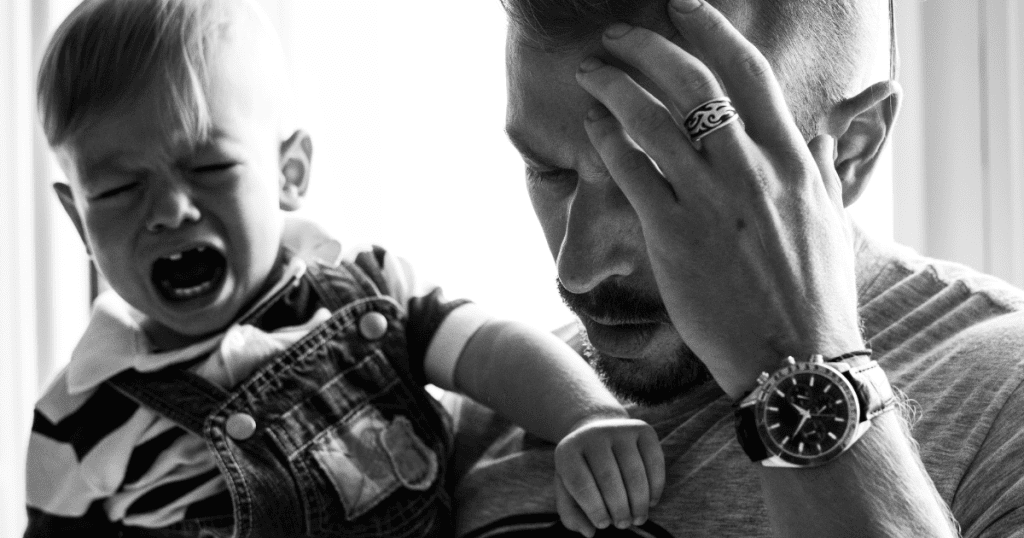
It can begin with exhaustion, unfinished chores, a child who needs help, or a partner asking for support.
It can also start with an ordinary evening when nobody has the energy to make the narcissist feel important.
That is when the fantasy starts colliding with reality.
My cousin noticed it through small changes rather than one unmistakable incident.
Her husband became impatient when the children interrupted him, and got irritated when household responsibilities interfered with his plans.
He became noticeably colder whenever she needed practical help instead of offering praise.
At first, she explained each episode separately.
He was tired. Work was stressful. The children were difficult. Maybe she had caught him on a bad day.
That interpretation made sense because each incident seemed too ordinary to prove anything by itself.
Eventually, however, she noticed the pattern.
His warmth was strongest when family life made him feel admired.
It was weakest when family life required him to give something without receiving immediate emotional validation.
That distinction changed everything.
He had not necessarily stopped wanting the family.
He had become resentful of the people inside it because real people have needs, moods, limitations, and expectations.
They cannot remain permanently impressed by you or constantly reassure you.
They cannot organize their lives around protecting your self-image.
For someone with strong narcissistic patterns, that ordinary reality can feel like deprivation rather than intimacy.
Why You Kept Trying to Become Someone Easier to Love

Once the warmth disappears, many narcissistic abuse survivors do something completely understandable.
They start troubleshooting themselves.
You become quieter because maybe you were asking for too much.
You stop raising certain subjects because you know where the conversation will end.
You become exceptionally accommodating because you are trying to recreate the atmosphere that existed before the relationship became difficult.
My cousin gradually changed in ways that were almost invisible at first.
She stopped asking her husband for help unless she absolutely needed it.
She softened requests that did not require softening.
She became careful about raising problems because she knew his irritation would become another problem to manage.
She was not becoming weak.
She was attempting to solve a problem.
The difficulty was that she was using the wrong equation.
She assumed that if his withdrawal was caused by her behavior, changing her behavior would bring his affection back.
That is a logical conclusion when you believe you are dealing with an ordinary relationship conflict.
But the early version of a narcissistic partner may have been part of an idealization stage that was never sustainable.
You cannot make yourself endlessly agreeable enough to prevent another person’s resentment of ordinary intimacy.
Eventually, your needs will return.
You will get tired, disagree, and have an opinion.
You will need something.
And if the relationship depends on you remaining effortless, the problem was never that you became difficult.
It was that the relationship was built around an impossible version of you.
What the Relationship Trained You to Believe About Yourself

The most damaging part of this dynamic is not always the arguments.
Sometimes it is what happens to your internal expectations afterward.
When your needs have repeatedly been treated as inconvenient, you can become trained to ask for less.
You begin measuring your requests before making them, wondering whether something is reasonable enough to deserve a response.
I noticed this conditioning in myself through something as simple as asking my ex for help.
There were times when I would rehearse a completely ordinary request in my head before saying it.
This is because years of dismissive reactions had taught me to anticipate resistance.
I was not actually asking for anything extraordinary, yet I had learned to approach basic needs as though they required a legal defense.
That is what narcissistic dynamics can install.
You start confusing self-sufficiency with safety.
You become uncomfortable when someone offers consistent kindness because part of you expects the price to appear later.
You may even distrust a healthy relationship because emotional availability feels unfamiliar.
A person who has spent years being punished for having needs may interpret generosity as temporary and distance as inevitable.
None of this means there was something defective about you.
It means your nervous system adapted to the environment you repeatedly experienced.
The relationship taught you that being easy to deal with was safer than being fully known.
It taught you to monitor other people’s moods before acknowledging your own.
And it taught you to treat emotional distance as something you had probably caused.
Those lessons can remain long after the narcissistic relationship itself has changed or ended.
That is why healing from narcissistic abuse is not simply about realizing that someone treated you badly.
It is about noticing how thoroughly you were trained to doubt your right to expect better.
You Were Never Too Much, You Were Just in the Wrong Equation

The painful truth is that he may have wanted a family.
But he wanted the image of a family more than the emotional accountability required to sustain one.
He wanted the admiration attached to being a husband or father.
But real intimacy also means being inconvenienced, challenged, needed, and occasionally disappointed.
That is why the resentment can feel so personal.
You were not failing to be lovable.
You were becoming real.
There is an enormous difference.
I have learned that one of the clearest signs of healing is no longer trying to please another person.
It means no longer becoming the version of yourself that makes them comfortable.
You stop calculating how little you can need or how carefully you must speak.
You also stop measuring how much disappointment you can absorb before someone decides you are worth keeping close.
A healthy relationship does not require you to earn the right to have needs.
It makes room for them.
You were not asking for too much.
You were asking for a real relationship from someone who was only capable of performing one.
Related posts:
- Why Does a Narcissist Marry But Struggle to Love?
- 11 Parenting Wins That Drive Narcissistic Exes Crazy (Even If They Won’t Admit It)
- The Truth About Divorcing a Narcissist (And Why It Drains You First)
- 11 Hidden Demands Narcissistic Men Place on the Women They “Love”
- 10 Strange Ways a Narcissist Shows You They Love You (And Every One of Them Is a Red Flag)