
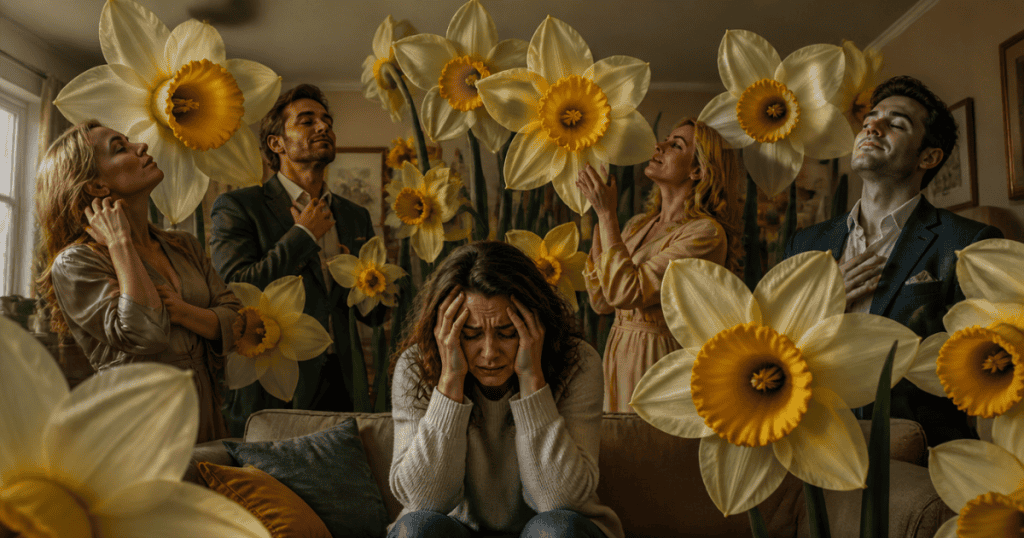
One of the quietest fears narcissistic abuse survivors carry is one they rarely admit out loud.
After everything you’ve been through, you wonder whether the relationship turned you into the person you spent years trying to escape.
Maybe you snapped at someone you love, or you became suspicious of everyone’s motives.
Maybe you said something in anger that didn’t sound like you at all.
I had that fear after another exhausting interaction with my narcissistic mother.
She spent the afternoon dismissing everything I said and insisting I was remembering events incorrectly.
Eventually I raised my voice, something I rarely do.
Instead of reflecting on what had pushed me there, she looked almost satisfied.
It’s as though my reaction had confirmed that I was the problem all along.
For days, I couldn’t stop asking myself the same question.
“What if she’s right? What if I’ve become just like her?”
If you’ve ever wondered the same thing, you’re far from alone.
The good news is that what you’re experiencing probably isn’t narcissism. It’s something very different.
Table of Contents
No, You Didn’t Become a Narcissist

No, being with a narcissist does not turn you into one.
Narcissistic Personality Disorder is not something you absorb through exposure.
It is a diagnosable personality disorder with developmental roots that go far beyond a single relationship.
Research supports this.
A 2000 twin study found that genetics explain most of the variation in narcissistic personality disorder.
Relationship-specific environmental factors had little influence.
In other words, you don’t develop narcissistic personality disorder simply because you spent years living with someone who has it.
Think of it this way.
You don’t catch someone’s eye color by living in the same house.
You don’t inherit their personality disorder because you shared your life with them.
What you can develop are trauma responses.
Years of manipulation teach your brain to stay alert, question yourself, and adapt to survive.
Those changes can feel frightening because they affect how you behave, but they aren’t the same as becoming a narcissist.
The real question isn’t whether you’ve become them.
It’s whether you’ve been surviving them for so long that you’ve forgotten what feeling emotionally safe is like.
What a Relationship Like That Actually Does to You
Living with constant manipulation changes the way you see yourself.
Not because your personality disappears, but because your confidence slowly does.
You stop trusting your own memory because every disagreement becomes proof that you’re “confused.”
You apologize before you’ve even decided whether you’ve done anything wrong.
You begin filtering every word because you’re trying to prevent the next argument before it starts.
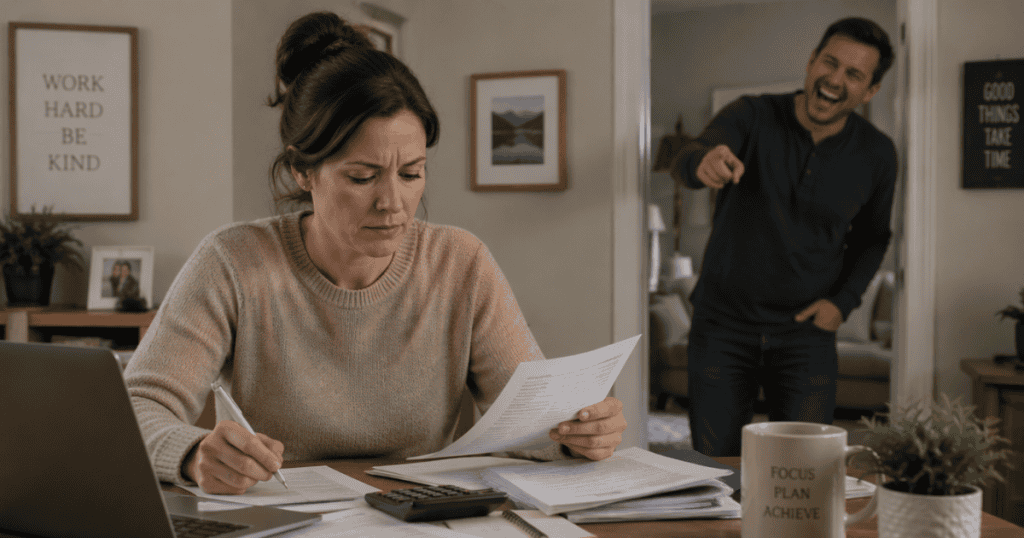
One morning I was organizing paperwork when my toxic younger brother started criticizing the way I had arranged everything.
Within minutes, he was explaining why my decisions made no sense.
I caught myself apologizing, even though I knew I hadn’t done anything wrong.
Later that day, I realized what bothered me most.
I hadn’t apologized because he was right. I did it because I had been trained to keep the peace.
That’s what prolonged narcissistic abuse does.
It teaches you that emotional safety depends on staying small.
Over time, you become more anxious, more cautious, and less certain of your own perception.
Those changes can make you feel like a different person.
But they are trauma responses, not personality traits.
A personality trait reflects who you consistently choose to be.
A trauma response reflects what your nervous system learned it had to do to survive.
That distinction matters because trauma can heal.
Your identity was never the problem.
Why Recognizing Their Patterns Doesn’t Mean You’re Repeating Them

You Learned Their Playbook, You Didn’t Inherit It
After enough time around a narcissist, their behavior stops surprising you.
You know when blame-shifting is coming.
You recognize projection before they’ve finished the sentence, and can almost predict the conversation before it happens.
I reached that point with my toxic sister.
If she felt criticized, she denied it.
If that failed, she blamed someone else.
If that didn’t work, she questioned my memory.
The pattern became so familiar that I could almost finish the conversation for her.
At first, that frightened me.
I wondered why I understood her way of thinking so well.
Eventually I realized I hadn’t become like her.
I had simply learned the rules of the game because understanding them helped me protect myself.
Recognizing manipulation is a survival skill.
Using manipulation to control other people is something entirely different.
If They Called You the Narcissist, That Was Likely Projection
One of the cruelest tricks narcissists use is accusing you of the very behavior they’re refusing to acknowledge in themselves.
You’re called selfish after years of putting everyone else first.
You’re called manipulative after being manipulated.
You’re called abusive after finally standing up for yourself.
My toxic parent once managed to turn a calm conversation about boundaries into a discussion about my supposed controlling behavior.
By the time it ended, I wasn’t thinking about what she had done anymore.
I was questioning whether I had somehow become the toxic one.
That’s exactly what projection is designed to do.
It shifts your attention away from their narcissistic behavior and onto your character.
Instead of asking whether they treated you fairly, you spend weeks asking whether you’re secretly the narcissist.
Ironically, the fact that you’re asking that question is often one of the clearest signs that you aren’t.
Genuine narcissists rarely spend sleepless nights worrying about how their behavior affects other people.
What Happens When You Finally Snap Back
Eventually, almost every narcissistic abuse survivor reaches a breaking point.
This is because no one can absorb years of criticism, manipulation, and emotional exhaustion without reacting.
Psychologists often refer to this as reactive abuse.
Despite the name, it doesn’t mean you’ve become abusive.
It describes what happens when someone is pushed beyond their emotional limits.
They finally respond with anger, harsh words, or behavior that feels completely unlike them.
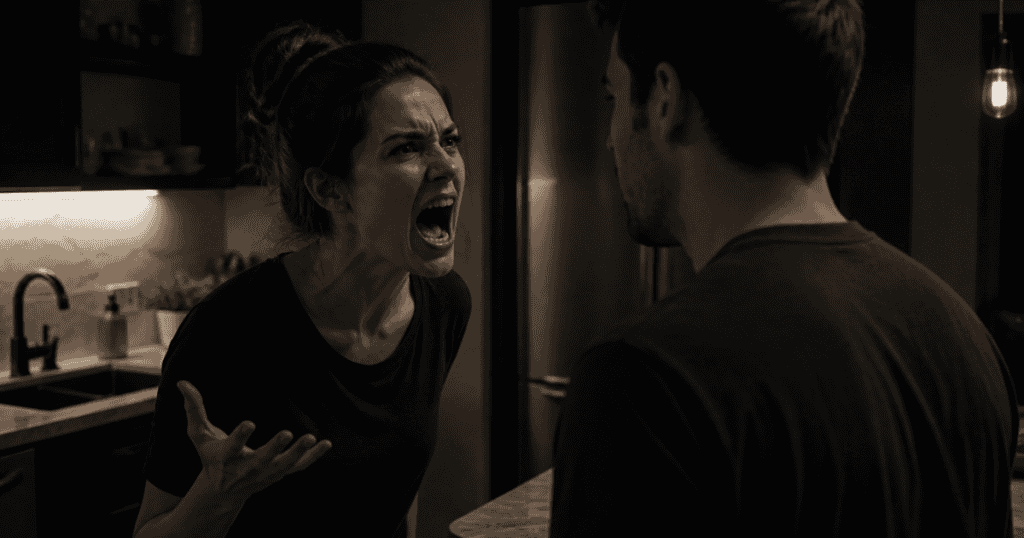
My controlling brother pushed me to that point one afternoon while I was sorting paperwork.
For weeks he had criticized every decision I made, mocked my opinions, and blamed me whenever something went wrong.
That day, after another sarcastic comment, I finally shouted back.
Instead of acknowledging everything that had led to that moment, he smiled and calmly said, “See? You’re the abusive one.”
Suddenly, months of manipulation disappeared from the conversation.
Only my reaction mattered.
That’s why reactive abuse is so confusing for survivors.
The narcissist ignores the hundreds of moments they provoked you and focuses on the one moment you finally reached your limit.
They use your worst reaction to erase the pattern that caused it.
That doesn’t mean your reaction was healthy.
Most survivors wish they had handled those moments differently.
But there is a huge difference between losing control after prolonged abuse and building your life around or manipulating other people.
One is a reaction born from survival.
The other is a consistent way of treating people.
Healthy people usually feel remorse after they lose their temper.
They reflect on what happened and genuinely want to do better next time.
Narcissists are far more likely to justify their behavior, deny responsibility, or insist everyone else deserved it.
That distinction matters far more than one painful moment.
How to Actually Know the Difference

Do You Still Feel Empathy for Other People?
Many survivors become frightened when they stop feeling sympathy for the person who hurt them.
They mistake emotional detachment for losing empathy.
Those are not the same thing.
After creating distance from my narcissistic mom, I no longer felt responsible for rescuing her from every problem she created.
At first, I wondered if I had become cold.
Then I noticed I still cared deeply when someone I loved was struggling.
Because of that, I realized that my empathy had simply stopped being available to someone who repeatedly used it against me.
The real question isn’t whether you still feel sorry for your abuser.
It’s whether you still care about the people who treat you with kindness and respect.
Do You Feel Entitled to Get Your Way at Others’ Expense?
Years of having your own needs ignored can make healthy boundaries feel selfish.
But wanting respect isn’t entitlement.
Real entitlement believes other people’s needs should always come second.
It expects special treatment without considering the impact on everyone else.
Survivors usually want something much simpler.
They want to be heard, to have their feelings taken seriously, and to have relationships that don’t require constant self-sacrifice.
Those aren’t narcissistic demands.
They’re healthy expectations.
Do You Need Constant Admiration to Feel Okay?
One of the defining characteristics of narcissism is a constant need for admiration, superiority, and external validation.
Survivors often confuse that with the simple desire to finally feel seen.
After years of having your achievements dismissed and your feelings minimized, it’s completely normal to want someone to recognize your effort.
That’s not grandiosity.
That’s a human need that went unmet for far too long.
Healthy people appreciate validation, but they don’t depend on it to feel worthy.
They can celebrate other people’s success, and admit when they’re wrong.
They maintain relationships that aren’t centered around themselves.
You’re Not the Narcissist, You’re the One Who Survived One

What you’re noticing in yourself is the cost of surviving prolonged manipulation, not a sign that you’ve become a narcissist.
Healing means slowly reconnecting with who you were before fear, self-doubt, and constant vigilance reshaped how you saw yourself.
The coping strategies that helped you survive don’t have to become your permanent identity.
And perhaps the clearest answer has been with you all along.
Narcissists rarely spend sleepless nights wondering whether they’re narcissists.
Survivors do.
The fact that you’re asking the question isn’t proof that you’ve become them.
More often, it’s proof that your empathy, your conscience, and your desire to treat people with kindness are still intact.
Related posts:
- Experts Say 1 in 6 Are Narcissists: Are You One
- Do Narcissistic Parents Raise Narcissists? Here’s My Story
- 5 Unpopular Emotions That Tell a Narcissist You’re No Longer Their Target
- 7 Things Normal People Learn With Age That Narcissists Are Still Missing in Their 70s
- 5 Things to Do When You Catch Yourself Missing a Narcissist