

For years, I thought I was just too sensitive, someone who needed to get over things and stop making everything a big deal.
Nobody in my house ever used the word “narcissist.” They just called it Tuesday.
My mother could walk into a room and charm everyone in it. People adored her and believed every word she said.
Behind our front door, she called me stupid.
She called me dumb and useless, and she made me feel like a disappointment before I had done anything to earn it.
I did not have language for any of that as a kid.
I only knew a mother everyone else worshipped, and a very different woman at home.
It took years for me to connect the dots.
My own life kept repeating patterns I could not explain, like the anxiety with no clear cause and the way I apologized constantly for taking up space.
Researchers have spent decades studying these patterns in children raised by narcissistic parents.
If you are recognizing pieces of yourself in the seventeen signs ahead, you are looking at documented responses to a documented pattern of abuse.
This list exists so you can finally see what you lived through.
17 Signs You Experienced Narcissistic Abuse as a Child

1. You Are a People Pleaser
I spent my childhood trying to earn basic warmth from my narcissistic mother.
I cleaned my room without being asked, and brought home good grades.
I stayed quiet when she was in a mood, hoping today might be the day she was proud of me. She rarely was.
Managing her feelings became my job before I understood what a job even was.
That training does not disappear once you leave the house.
It follows you into every relationship where you shrink yourself to keep someone else comfortable.
People-pleasing is a survival strategy your nervous system learned to keep you safe.
2. You Find It Hard to Maintain Healthy Relationships
Nobody in my house showed me what a calm, respectful relationship looked like.
I grew up watching charm turn into cruelty within minutes, so chaos became my definition of normal.
As an adult who grew up in a toxic family, I found myself drawn to people who needed fixing, mistaking the effort of managing them for love.
I tolerated behavior a healthy person would have walked away from immediately.
This is because it matched the temperature of the home I grew up in.
Recognizing a stable relationship takes practice when you were never shown one.
3. Saying No Feels Dangerous
Telling my mother “no” was never treated as a normal part of being a kid.
It was treated as defiance.
And defiance had consequences, whether that meant silence for days or a punishment that outweighed whatever I had actually done.
I learned fast that my limits were not mine to set.
As an adult, I over-apologize for things that need no apology.
I have also talked myself out of naming real violations because conflict still feels like danger to my body.
Saying no can still make my chest tighten, even when I know I am safe.
4. You’re Hypervigilant

I learned to read my toxic parent before I could read a full sentence.
Her footsteps down the hallway told me what kind of night it would be.
Her tone in the first ten seconds of a conversation told me whether to disappear or perform.
A silence that lasted too long meant something was coming.
That constant scanning kept me safe as a child, so my nervous system never learned how to turn it off.
I still notice tone shifts and pauses in conversations most people would never register, long after I stopped needing to.
5. You Doubt Yourself Constantly
My mother called me stupid so often that I stopped questioning whether it was true.
Dumb, useless, a disappointment.
Those words, if repeated enough times, stop sounding like opinions and start sounding like facts.
I carried that voice with me long after I left her house.
I second-guessed decisions I had every right to make and shrank my own opinions before anyone else could reject them.
A child does not have the tools to argue with a narcissistic parent‘s verdict.
She just absorbs it and calls it self-knowledge.
6. You Fear Success as Much as Failure
My self-absorbed mom needed to be the brightest person in every room, including her own home.
Any sign that I might outshine her got quietly punished with silence or a comment designed to shrink me back down to size.
I learned that being too good at something invited trouble.
That lesson followed me into adulthood as a strange kind of self-sabotage right before a big win.
It’s a pattern rooted in years of conditioning that told me visibility was dangerous.
Success can still feel like it is inviting punishment before I even reach it.
7. You Feel Isolated

What happened in my mother’s house stayed in my mother’s house.
She had a way of making sure I never got too close to anyone who might ask questions or notice bruises that weren’t physical.
Friendships got discouraged or quietly sabotaged before they could turn into real support.
I grew up believing our family business was a secret I had to protect, even when protecting it meant protecting her.
As an adult, reaching out for help still feels like a betrayal I have to talk myself into.
8. Making Decisions Is Harder Than It Should Be
Every choice I tried to make as a kid got overridden, criticized, or punished until I stopped trying to make them at all.
I learned to wait for direction instead of trusting my own judgment.
That same voice that called my perceptions wrong shows up again, telling me my decisions will be wrong too.
As an adult, even small choices like picking a restaurant can trigger a wave of anxiety that has nothing to do with the restaurant.
9. You Self-Sabotage
Good things never lasted long in my mother’s house.
A calm week usually meant a storm was building, so I grew up believing happiness had an expiration date I could not control.
As an adult, that belief still shows up in relationships and plans that are going well.
I catch myself picking fights or pulling away right when things feel stable.
Ending something myself gives me a sense of control that waiting for it to be taken from me never could.
10. You Don’t Know Who You Are
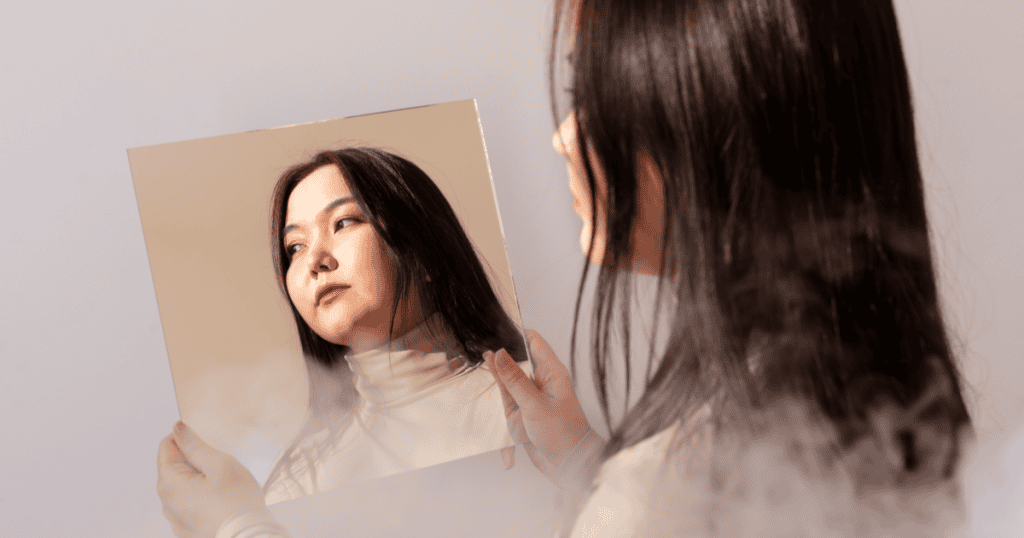
Figuring out who you are takes room to explore, make mistakes, and be seen for who you actually are underneath it all.
My mother filled that room with her own version of me before I ever got the chance.
I spent years living inside a definition she wrote.
It was one where my thoughts, my taste, even my personality were only acceptable if they matched what she wanted to see.
I did not know what I actually liked or believed until well into adulthood.
Finding out has taken longer than I expected, and I am still uncovering pieces of myself.
11. Anxiety Follows You Everywhere
My house never had a settled rhythm, so my body never learned what calm was supposed to feel like.
Even now, in a life that is genuinely safe, I can feel restless for no clear reason or brace for a problem that never shows up.
The CDC and Kaiser Permanente ran a landmark study in 1998 on adverse childhood experiences.
It found that people who experienced four or more of these experiences face significantly higher rates of anxiety, depression, and PTSD as adults.
That number is not a coincidence. It is a nervous system doing exactly what it was trained to do.
12. You Carry a Depression You Can’t Always Explain
My mother is still alive, which means nobody expected me to grieve her.
I did anyway, and some days I still do, mourning a version of her that only existed in what I needed from a mother.
That grief has no funeral and no sympathy card, and it tends to confuse people who grew up with parents who showed up emotionally.
Losing something that was never there in the first place is a strange kind of loss to explain.
That sadness can sit underneath an otherwise good day for no reason anyone else can see.
13. You Feel on Edge for No Obvious Reason
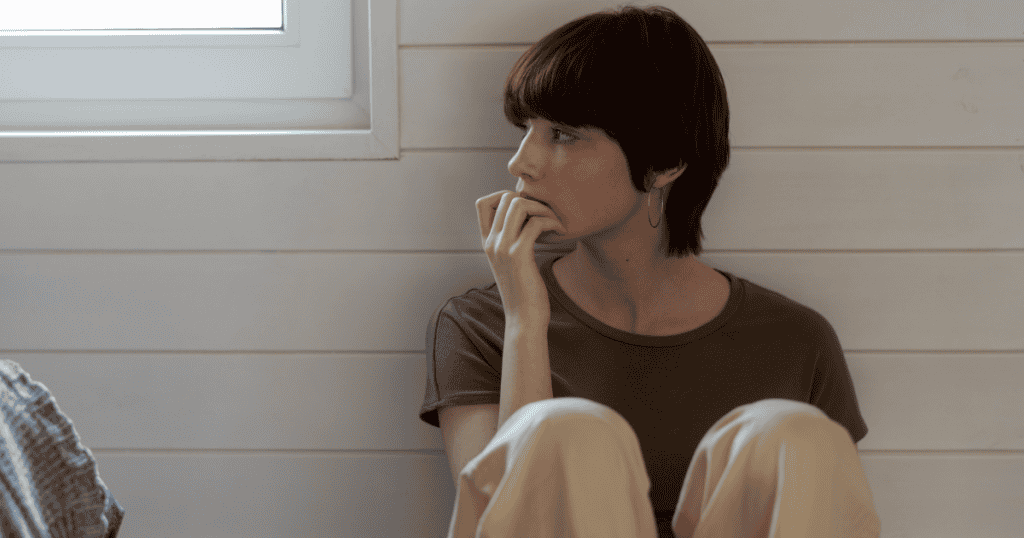
My body remembers things my mind has never fully worked through.
I can feel tension gather in my shoulders or my jaw before I even register what triggered it.
It’s a physical leftover from years of bracing for whatever mood walked through the door next.
Irritability shows up out of nowhere on ordinary days, aimed at nothing in particular.
That edge is not about the present moment, but an old data still running in a body that spent years preparing for impact.
14. Trust Is Complicated
The first person who was supposed to be safe for me was not, and that becomes the template a child builds every future relationship on.
Some narcissistic abuse survivors overtrust, drawn back toward familiar dysfunction because it feels recognizable even when it hurts.
Others undertrust, keeping everyone at arm’s length because distance feels safer than risking betrayal again.
I have lived on both ends of that spectrum at different points in my life.
Sometimes I trust people who mirrored my mother’s patterns, and sometimes I shut out people who genuinely deserved my trust.
Either way, the cost is the same.
Genuine connection stays just out of reach.
15. You Gaslight Yourself
I was told my version of events was wrong so many times that I started correcting myself before anyone else had the chance to.
My mother would call something that happened dramatic or made up.
Eventually, I stopped needing her in the room to do that to myself.
That gaslighting habit did not end when I left her house.
I still catch myself talking myself out of a valid feeling.
I also downgrade a real observation into an overreaction, doing to myself what she used to do to me.
16. Everyone Else’s Needs Come Before Yours

Genuine generosity comes from choice and leaves you full even after giving.
What I grew up practicing was different.
I became the emotional caretaker in my family long before I understood the word.
I tracked everyone’s moods and needs while mine waited quietly in a corner nobody checked.
That role stopped feeling like a behavior somewhere along the way.
It started feeling like my identity, the thing that made me valuable in a narcissistic family that never valued me for just existing.
Putting myself first as an adult still triggers guilt that feels disproportionate to the actual act.
17. You Dissociate
When home felt overwhelming or unsafe too often, my mind learned to create distance from the present moment as a way of protecting me.
I would go quiet during arguments, present in the room but somewhere else entirely in my head.
That same pattern still shows up in emotional conversations or close relationships.
This is especially true for ones that carry even a faint echo of what that original environment felt like.
I notice myself drifting out of my own body in moments that matter most, and it takes real effort to stay present and pull myself back.
Seeing Yourself in This List Is Not the Whole Story, It’s Just the Beginning of It

Every sign on this list was a survival strategy, and survival strategies can be unlearned once the emergency that created them is over.
I was the child who absorbed every one of these patterns without a single word for what was happening to me.
I am also the adult who eventually named it, walked away from it, and built a life that looks nothing like the one I grew up in.
That arc is proof these signs mark a starting point, not a life sentence.
You were not born anxious, hypervigilant, or unable to trust.
Those patterns were installed by someone who was supposed to protect you from exactly this kind of damage instead.
Seeing yourself clearly in this list is the first honest look at what happened.
And that honesty is where your freedom actually begins.
Related Posts:
- Do Narcissistic Parents Raise Narcissists? Here’s My Story
- 25 Characteristics of a Narcissistic Mother: You’re Not Alone
- 4 Types of Narcissistic Mothers: I Seek to Understand and Heal
- 5 Reasons Narcissists Have Children (And How It Differs From Healthy Parents)
- 5 Negative Narcissistic Family Cycles That I Will NOT Continue With My Son