

Narcissists will call your peace “revenge” the moment it threatens their control.
I remember the first time I didn’t argue back.
My mother had spent the entire afternoon picking apart my choices. My career, my tone, even how I folded the laundry.
Normally, I’d defend myself, desperate to prove I wasn’t the villain she painted me to be.
But that day, I simply said, “I’m done talking,” and walked away.
The silence that followed was deafening.
She stared at me like I’d just betrayed her and said, “You’re cruel. You love watching me suffer.”
That was the moment I understood that narcissists confuse peace with punishment.
When you stop feeding their chaos, they interpret it as an attack.
But there’s a massive difference between protecting your peace and punishing someone who hurt you.
One is born from healing; the other from pain.
This article will unpack that difference and why narcissists twist the two so skillfully.
Table of Contents
The Core Difference Between Boundaries And Revenge
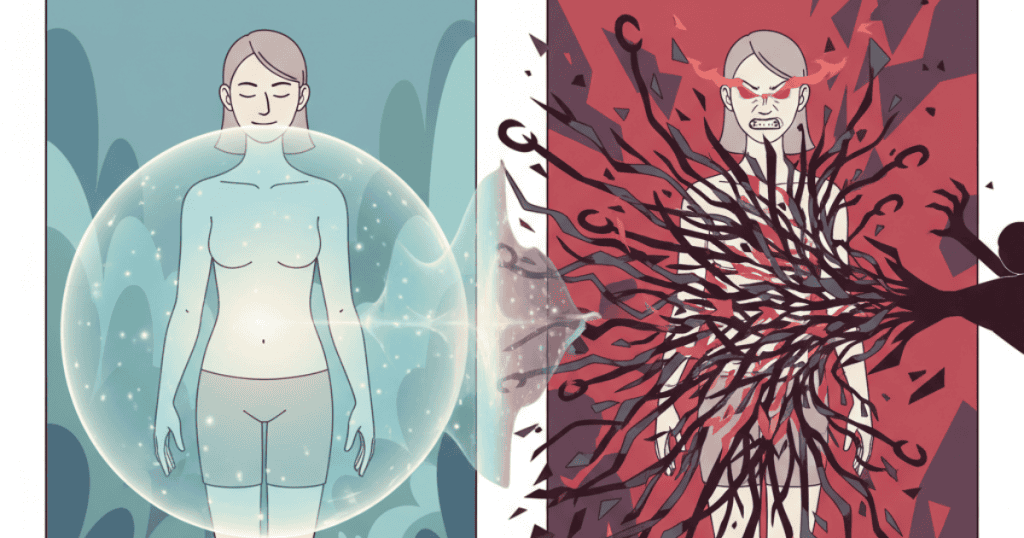
Boundaries and revenge often get tangled in the same emotional web, but they couldn’t be more different.
Boundaries are internal. They are about you.
They protect your mental health, time, and peace. They emerge from reflection, clarity, and healing.
Revenge is external. It’s about them.
It’s reactionary, fueled by pain and ego, and it places the abuser at the center of your world again.
The two may look similar from the outside. Both involve pulling back, saying no, or going silent.
But their intention is the difference between empowerment and entrapment.
A boundary says, “I’m choosing to protect myself.”
Revenge says, “I’m choosing to make you feel what I felt.”
Narcissists blur that line deliberately.
To them, your detachment is rebellion. Your peace is disobedience, and your boundaries are betrayal.
And because they live off control, they’ll do everything they can to make you doubt yourself.
Boundaries Protect Your Peace
Boundaries are self-respect in motion.
They don’t punish. They prevent.
They say, “I decide what stays in my world.”
After years of emotional manipulation from my toxic brother, who would bait me with “jokes” that were really insults, I finally stopped engaging.
I remember the first time I ignored his mockery about my weight and kept scrolling on my phone.
He laughed, waiting for me to snap back. When I didn’t, he grew louder, like a performer losing an audience.
“Wow, can’t even take a joke now?” he sneered.
That’s when it clicked: my silence was starving his ego.
Boundaries aren’t walls to punish others. They’re shields that stop the bleeding.
Healthy boundaries don’t aim to change anyone else’s behavior. They simply clarify what you will no longer tolerate.
You can’t teach a narcissist to respect your limits, but you can teach yourself to enforce them.
Sometimes it means saying, “I’m not discussing this.” Sometimes it’s walking away mid-argument.
And sometimes it means complete no contact.
Boundaries protect peace by removing you from the emotional battlefield altogether.
Revenge Disturbs Someone Else’s Peace
Revenge, though tempting, is a trap disguised as triumph.
It’s that moment you want to “teach them a lesson,” to show your narcissistic parents and siblings what losing you really feels like.
But revenge is still a form of emotional engagement.
I learned this when my aunt began gossiping about me after I distanced myself.
She twisted my silence into “arrogance” and told my narcissistic family that I thought I was better than them.
Furious, I planned to confront her in front of everyone, to humiliate her with the truth.
But as I imagined the confrontation, I realized that I was still centering her. I was still reacting to her manipulation.
Revenge feels empowering because it mimics control.
It’s the emotional equivalent of holding the steering wheel after years of being a passenger in chaos.
But it’s not real freedom. It’s a performance still dictated by their script.
And narcissists thrive on that.
They don’t care “how” you engage, only that you “do.”
Even your anger feeds their sense of importance.
Revenge is like throwing gasoline on a fire and calling it closure. It burns hot, but it doesn’t heal.
How Narcissists Twist The Narrative
The moment you start enforcing boundaries, narcissists launch their favorite psychological weapon: projection.
They’ll accuse you of the very things they’re guilty of.
When you withdraw, they’ll claim you’re “punishing” them.
When you stop engaging, they’ll cry that you’re “emotionally abusive.”
When you find peace, they’ll label you “cold” or “ungrateful.”
My toxic mom once told me, “You used to care about family. Now all you care about is yourself.”
It was ironic, considering I’d spent my entire life caring about her moods before my own needs.
What she really meant was, “You no longer revolve around me.”
This projection is strategic. It’s meant to confuse you into submission.
Narcissists know that empathetic people will spiral into guilt the moment they’re accused of cruelty.
They weaponize your conscience. And once guilt sets in, they reel you back.
They might cry, beg, or play the victim and say:
- “You’re abandoning me when I need you most.”
- “I guess I was right. You really don’t care about family.”
- “You’ve changed, and not for the better.”
But what’s really happening is they’re losing their grip, and they’re terrified.
Recognizing their manipulation for what it is helps you detach emotionally.
It turns guilt into clarity. It reminds you that peace is protection rather than punishment.
When you stop explaining, apologizing, or defending, you strip away their favorite weapon: your emotional availability.
The Hidden Trap Of Revenge

Why It Feels Empowering (But Isn’t)
Let’s be honest, revenge feels delicious in theory.
After years of swallowing pain, the fantasy of “getting even” feels like balance.
You imagine your narcissistic family member seeing you thrive and regretting how they treated you.
You imagine finally having the upper hand.
But revenge, no matter how elegant, is still a chain.
When my brother started spreading rumors about me after I cut him off, I wanted to expose him publicly.
I had proof, screenshots, voice messages, everything.
My husband, ever the voice of reason, said quietly, “Do you really want to win that way?”
It hit me.
Revenge keeps the narcissist relevant.
Every ounce of energy you pour into proving them wrong is energy stolen from your healing.
True empowerment isn’t about showing them you’re better. It’s about not needing their validation at all.
It’s about thriving so silently that they’re forced to imagine your peace, and knowing you owe them no explanation.
Why It Keeps You in Their Cycle
Narcissists survive on emotional fuel, like love, anger, tears, and even hatred.
To them, engagement equals existence.
That’s why revenge never works. It keeps you emotionally tethered to their system, still orbiting around their behavior.
My jealous sister once tried to guilt me by saying, “You’re not talking to us because you think you’re perfect.”
I almost took the bait. I almost launched into a speech explaining my intentions.
But then I remembered, she didn’t want understanding. She wanted access.
Every explanation is an invitation back into chaos.
Revenge gives them that door.
It reopens wounds you fought so hard to close and re-establishes the emotional connection you worked months to sever.
Instead, redirect that energy inward.
Read the books. Build the business. Take the class. Let your healing be your quiet revolution.
Because nothing disarms a narcissist faster than indifference.
Not hatred, not revenge, but true indifference. The kind that says, “You no longer exist in the part of my world that matters.”
That’s peace they can neither mimic nor destroy.
The Strength In Quiet Boundaries

True boundaries are quiet revolutions.
They don’t come with announcements, ultimatums, or dramatic exits. They unfold in the everyday decisions that reclaim your peace.
For me, it looked like answering my self-absorbed mom’s calls only once a week instead of every day.
It looked like smiling politely at my narcissistic sister without engaging in her “innocent” gossip.
It looked like refusing to attend gatherings that drained me, and not feeling guilty for choosing rest.
At first, every act of peace felt like rebellion.
I’d lie awake wondering if I was becoming heartless.
But then I realized that peace only feels wrong when you’ve been trained to live in chaos.
Quiet boundaries are not silence out of fear, but silence born from strength.
When you no longer explain yourself, people who thrived on controlling your narrative will accuse you of arrogance.
Let them. The less you defend, the more you heal.
Power doesn’t always roar. Sometimes it whispers, “I owe no one access to my peace.”
Questions To Ground Yourself Before Acting

When the urge to react surges, to clap back, prove, or expose, stop and breathe.
Ask yourself:
- “Is this helping me heal or helping me get even?”
- “Am I protecting myself or performing for their reaction?”
- “Would the version of me I’m becoming be proud of this choice?”
These questions shift you from reactivity to reflection.
Every pause is a neural reset, a moment where you tell your nervous system, “We’re safe now.”
Because that’s the real battle after narcissistic abuse: retraining your body to believe that peace isn’t a setup.
It’s learning that silence isn’t danger, and stillness isn’t punishment.
Choosing calm over chaos is the most strategic move you’ll ever make.
It’s emotional intelligence in its highest form. It’s learning that the smartest retaliation is no retaliation at all.
You win not by proving you’ve healed, but by no longer needing to prove anything.
You Rise By Choosing Peace, Not Payback

There was a time when setting boundaries felt “mean.”
I used to apologize after every confrontation, terrified that I was becoming like them.
But I’ve learned that peace is not cruelty. It’s clarity.
Now, boundaries make me feel grounded rather than guilty.
Revenge feeds the ego. It screams, “Look at me now.”
Boundaries feed the soul. They whisper, “I’m free now.”
You don’t need to burn bridges to prove you’ve moved on. You just stop crossing them.
You don’t win by matching their cruelty. You win by outgrowing the game entirely.
The day I stopped explaining myself to my mother, I finally exhaled.
The day I stopped seeking my sister’s approval, I rediscovered joy.
The day I stopped reacting to my brother’s provocations, I realized how small his world really was.
Peace doesn’t erase your story. It rewrites your ending.
And that is the quietest, sharpest form of victory there is.
Related posts:
- The One Compliment That Sends a Narcissist Into a Rage
- 10 Nonverbal Abuse Tactics Narcissists Use to Control You
- 9 Subtle Boundaries That Send a Narcissistic Gaslighter Into Total Meltdown
- 7 Comebacks for When Narcissists Guilt Trip You Into Saying Yes
- 6 Smart Ways to Call a Narcissist ‘Are You Dumb?’ Without Them Catching On